Treasure Coast Surf Spots at a Glance
- The Treasure Coast has surf breaks in three counties: Martin, St. Lucie, and Indian River. Okeechobee County has no ocean coastline.
- Sebastian Inlet State Park is the most famous and consistent break in the region. Its north jetty is temporarily closed, and bridge construction has closed some parking and the south-side beach access.
- The Fort Pierce Inlet is the main surf hub in St. Lucie County, with breaks on both sides of the inlet.
- Beginners do best at lifeguarded beaches like Pepper Park, Waveland Beach, Jensen Beach, and Stuart Beach.
- The best surf usually runs from fall through spring. Summer is mostly small, except when tropical storms send swell.

Why the Treasure Coast Gets Good Surf
Much of South Florida sits behind the Bahamas, which block a lot of the ocean swell headed for the coast. That shadow starts to fade as you move north through Martin County and St. Lucie County. Swells that never reach Palm Beach County often show up on the Treasure Coast.
The region also has two big inlets with rock jetties, at Fort Pierce and Sebastian. Waves bounce off the jetties and build into sharp, defined peaks. Nearshore reefs and rock ledges at spots like Walton Rocks and Hobe Sound add more shape on the right swell.
This guide lists the main surf spots from south to north, with notes on who each spot suits and what to know before you paddle out.
Martin County Surf Spots
Hobe Sound Beach
Hobe Sound Beach sits on Jupiter Island at the south end of Martin County. Its mix of reef breaks and a long sandbar draws surfers from around the county. It works best on a northeast swell with a west wind. The rocky bottom and more powerful waves make it better for intermediate and advanced surfers.
The beach has lifeguards, restrooms, and outdoor showers. In summer, the Hobe Sound Surf Camp runs here for kids ages 6 to 16. Find more about the area on our Hobe Sound page.
- 🏄 Best for: Intermediate to advanced surfers
- 🛟 Lifeguards on duty
- ⚠️ Watch for rocks on low tide
Stuart Rocks (Chastain Beach and the House of Refuge)
Stuart Rocks is the reef break at the south end of Hutchinson Island, along MacArthur Boulevard. Waves break over the limestone rocks in front of the historic Gilbert’s Bar House of Refuge. Most surfers park and paddle out at Chastain Beach, the beach access right next to the House of Refuge, between it and Bathtub Reef Beach. Local surfers often call Chastain “Stuart Rocks” or simply “the Rocks.”
The wave favors lefts and works best on a northeast swell with a low, rising tide and a west wind. It does not break often, and the rocky bottom makes it a spot for intermediate and advanced surfers. When it is good, a loyal local crew shows up, so wait your turn and do not drop in.
Chastain Beach has restrooms, showers, and a raised boardwalk where you can watch the surf. Lifeguards are posted only part of the year. Parking is limited, and this end of the island sometimes closes for beach renourishment or road repairs, so check access before you go.
- 🏄 Best for: Intermediate to advanced surfers
- 📍 Park at Chastain Beach next to the House of Refuge
- ⚠️ Shallow rocks and reef, especially on low tide
Stuart Beach
Stuart Beach sits a couple of miles north of Stuart Rocks, across from the Elliott Museum. It is one of Martin County’s lifeguarded beaches. Depending on how the sandbars set up, it can hold bigger swells and give longer, stronger rides than most spots nearby. Free parking, restrooms, showers, and a beachside cafe make it an easy all-day stop. See more things to do nearby on our Stuart page.
- 🏄 Best for: All levels, depending on swell size
- 🛟 Lifeguards on duty
- 🅿️ Free parking
Jensen Beach Park
Jensen Beach Park, also called Jensen Sea Turtle Beach, sits where the Jensen Beach Causeway meets A1A. A mix of rock and sand on the bottom helps it handle both strong groundswells and choppy wind swell. That makes it one of the more reliable beach breaks on Hutchinson Island.
The beach has lifeguards, restrooms, showers, and a big parking lot. It is a common spot for lessons and summer surf camps. Explore more of the town on our Jensen Beach page.
- 🏄 Best for: Beginners on small days; all levels on good swells
- 🛟 Lifeguards on duty
View this post on Instagram
Glasscock Beach
Glasscock Beach is the northernmost public beach in Martin County, close to the St. Lucie County line. A small sign marks the entrance, and the lot holds about 30 cars. That keeps the lineup thin even on good days.
The wave is a typical beach break that changes with the sandbars. There are no lifeguards, so surf with a friend.
- 🏄 Best for: Surfers who want a quiet lineup
- 🅿️ Small lot; arrive early on swell days
- ⚠️ No lifeguards
St. Lucie County Surf Spots
Waveland Beach
Waveland Beach is the southernmost lifeguarded beach in St. Lucie County, on South Hutchinson Island. It is one of the mellower breaks on this stretch, with soft summer waves that work well for pop-up practice and first lessons.
Bigger swells can make it rough, so check conditions before you paddle out. Waveland also marks the start of a 13.2-mile bike path that runs north along A1A. Find more beaches and dining nearby on our Hutchinson Island page.
- 🏄 Best for: Beginners on small days
- 🛟 Lifeguards on duty
Walton Rocks Beach
Walton Rocks Beach sits just south of the St. Lucie Nuclear Power Plant. It is known for powerful surf over a shallow reef. When a good swell is running, the reef gives the waves more shape than a typical sand beach. It also means you need to know where the rocks are, especially on low tide.
Walton Rocks is also St. Lucie County’s off-leash dog beach, so expect four-legged company on the sand.
- 🏄 Best for: Experienced surfers
- ⚠️ Shallow reef and rocks; no lifeguards
- 🐕 Dog-friendly beach
View this post on Instagram
Blind Creek Beach
Blind Creek Beach sits just north of the power plant. In 2020, St. Lucie County officially designated part of the beach as clothing optional. It is the only sanctioned clothing-optional beach on the Treasure Coast.
The surf here is uncrowded and works best on a northeast swell with a light west wind. On most days it is average, but the empty lineup is the draw.
Jetty Park (South Jetty)
Jetty Park sits on the south side of the Fort Pierce Inlet, at the north tip of South Hutchinson Island. The south jetty and nearby sandbars create peaks that local surfers check often, along with the beach to the south.
This is also one of the most eroded beaches in Florida. A dredging project began in November 2026 to move sand from a trap inside the inlet back onto the beach. Access to the jetty is expected to stay open during the work, but expect pipes, crews, and changing conditions on the sand.
Fort Pierce Inlet State Park (North Jetty)
Fort Pierce Inlet State Park, known locally as “the Jetty” or “Pay Beach,” sits on the north side of the inlet. It is the home break for the Fort Pierce surf community and one of the most consistent spots on Florida’s east coast. The north jetty helps shape fast, peaky waves. The park has hosted many surf contests over the years.
The jetty picks up swell from the north all the way around to the southeast, so it often has waves when other beaches are flat. The waves next to the jetty are best for intermediate and advanced surfers because of the rocks and the strong inlet current. Newer surfers do better farther up the beach, away from the jetty.
The park has a half-mile beach, restrooms, showers, and picnic pavilions. Lifeguards are not on duty. For a deeper look, read our Fort Pierce Inlet State Park beach guide and our complete Fort Pierce surfing guide.
- 🏄 Best for: Intermediate to advanced near the jetty; beginners up the beach
- 💰 $6 per vehicle (2 to 8 people), $4 single occupant, $2 pedestrians and cyclists
- ⏰ Daily, 8 AM to sunset
- ⚠️ No lifeguards; strong current and rocks near the jetty
View this post on Instagram
Pepper Park Beachside
Pepper Park Beachside sits on North Hutchinson Island, behind the National Navy UDT-SEAL Museum, between Fort Pierce Inlet State Park and Avalon State Park. It is a low-key spot that local shops point beginners to. If a crowded lineup makes you nervous, this is a good place to practice.
Pepper Park is one of only two lifeguarded beaches in St. Lucie County, along with Waveland. The 52-acre park has restrooms, showers, parking, and picnic areas. Shallow reefs sit less than 100 yards offshore, and the park is also home to the Urca de Lima, a 1715 Treasure Fleet shipwreck preserve.
- 🏄 Best for: Beginners, families, first lessons
- 🛟 Lifeguards on duty
- 🅿️ Free parking with restrooms and showers
Avalon State Park
Avalon State Park covers more than 650 acres on North Hutchinson Island, about 4 miles north of Fort Pierce Inlet State Park. Its long, undeveloped beach is quieter than the inlet and works well on smaller swells, especially on an incoming tide with a west wind.
During World War II, Navy frogmen trained here, and some concrete and steel obstacles still sit underwater along the shore. Florida State Parks warns surfers and swimmers to watch for them. The park is open 8 AM to sunset and charges an entrance fee.
Indian River County Surf Spots
Vero Beach Breaks: Round Island to Conn Beach
Several Vero Beach beaches see good surf when the sandbars and swell line up. Local surfers name Round Island Park, South Beach Park, Conn Beach, and Riomar Point among their spots. The reef off Riomar can turn on during winter swells and hurricane swells.
South Beach Park and Humiston Beach Park both have lifeguards, which makes them good choices for newer surfers. These breaks change with the sandbars, so regular visits pay off. Read more local history and tips in our Vero Beach surfing guide.
Tracking Station Beach
Tracking Station Beach in Indian River Shores is a favorite of local surfers. Lifeguards are on duty from 9:10 AM to 4:50 PM, and the park has restrooms, showers, and a pavilion. The entrance sits between a CVS and a 7-Eleven on A1A.
Wabasso Beach Park
Wabasso Beach Park sits next to Disney’s Vero Beach Resort, south of Sebastian Inlet. Winter brings its best surf. A nearshore reef shapes the waves and also draws snorkelers and treasure hunters. The reef leads toward a Spanish shipwreck site known as Queens Jewels.
The beach has lifeguards, restrooms, and showers. Indian River County runs a live beach camera here, which is a quick way to check the surf before you drive.
- 🏄 Best for: All levels, depending on swell size
- 🛟 Lifeguards on duty
- 🤿 Snorkeling on calm days
Sebastian Inlet State Park
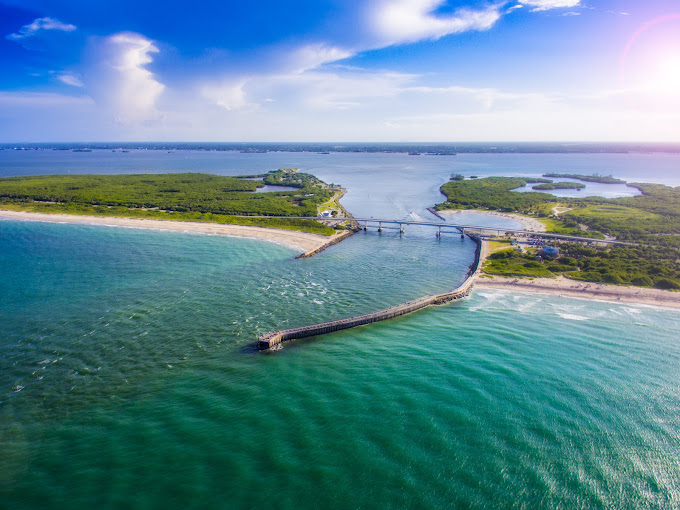
Sebastian Inlet State Park is the best-known surf spot in Florida. The park spans the Brevard and Indian River county line, just north of Sebastian, with more than 3 miles of Atlantic beach. Generations of Florida surfers have learned the inlet, including Kelly Slater. When the rest of the coast is flat, the inlet often still has a wave.
Know before you go: As of November 2026, Florida State Parks lists the north jetty as temporarily closed. Work to replace the Sebastian Inlet Bridge began in June 2026 and is expected to run through spring 2032. Parts of the north and south parking lots are closed, and beach access from the south side is unavailable. The north side can reach capacity on weekends. Check the park’s alerts before you go.
First Peak
First Peak breaks right next to the north jetty and is the most famous wave on the Treasure Coast. It formed after the north jetty was lengthened in the early 1970s. Waves reflect off the rocks and stack into a wedge. On south and southeast swells it can be one of the best waves in Florida, and northeast swells bring long lefts. It is fast, crowded, and not for beginners. Second Peak and Third Peak, just up the beach, are a little more forgiving.
Monster Hole
Monster Hole is not a hole. It is a shoal about a third of a mile off the beach on the south side of the inlet. On big swells it breaks with long, powerful lefts and shorter rights. The long paddle, strong currents, and sharks make it a spot for experienced surfers only. With south-side beach access closed during bridge work, getting there is harder than usual.
Just north of the park in Brevard County, Spanish House is another beach break surfers use when the inlet is crowded.
- 🏄 Best for: Intermediate to advanced surfers
- 💰 $8 per vehicle (2 to 8 people), $4 single occupant, $2 pedestrians and cyclists
- ⏰ North side open 24 hours; South Ranger Station open 8 AM to sunset
- 🚧 Bridge construction through spring 2032; north jetty temporarily closed
Treasure Coast Surf Seasons
Fall and Winter: Peak Season
The most consistent surf arrives from about October through March. Cold fronts and nor’easters push northeast swell down the coast, and the inlet breaks at Sebastian and Fort Pierce come alive. The best sessions often come the morning after a front passes, when the wind turns offshore and the waves clean up.
Hurricane Season
From late summer into fall, storms well offshore can send long-period groundswell to the Treasure Coast. These swells can bring the best waves of the year. They also bring strong rip currents and red flags, so they are for experienced surfers only.
Spring and Summer: Small and Mellow
Swells still show up in spring as fronts fade. By summer, most days are small, and the warm water makes it the easiest season to learn. Beginner beaches like Pepper Park, Waveland, and Jensen Beach have their best learning conditions now. Local surf camps run most of their sessions in summer.
Surf Shops, Rentals, and Lessons
- Spunky’s Surf Shop (Fort Pierce): A local shop on US 1 since 1994. It rents surfboards, including soft-top boards for beginners, and points customers to local instructors.
- Ohana Surf Shop (Hutchinson Island): Rentals, surf lessons, and summer camps for ages 5 and up. Ohana was voted the top surf shop in the 2026 USA Today 10Best Readers’ Choice Awards.
- Cowabunga Surf & Sport (Jensen Beach): A family-run shop offering lessons, board rentals, and a summer surf camp at Jensen Beach Park.
- Sebastian Inlet Surf & Sport (Melbourne Beach): The closest shop to the inlet, just north on A1A. It offers lessons and board rentals.
- Deep Six Dive & Watersports (Stuart and Vero Beach): A dive shop that also sells surfboards and gear.
For kids, check our Treasure Coast summer camps guide, which lists surf camps in Jensen Beach and Hobe Sound.
Tips for Surfing the Treasure Coast
- Check the cams and hotlines. Martin County, St. Lucie County, Indian River County, and the Sebastian Inlet District all run beach cameras. You can also call the Martin County beach hotline at (772) 320-3112 or the St. Lucie County beach conditions hotline at (772) 462-1421.
- Match the spot to your skill. First Peak, Monster Hole, Walton Rocks, and the Fort Pierce jetty are not for beginners. Start at a lifeguarded beach.
- Know where the lifeguards are. Martin County guards Hobe Sound, Stuart, and Jensen beaches, plus Bathtub Beach when it is open. In St. Lucie County, only Pepper Park and Waveland have lifeguards.
- Respect the jetties. Inlets have strong currents, sharp rocks, boat traffic, and anglers casting lines. Give fishermen room and never surf alone near the rocks.
- Follow lineup etiquette. The surfer closest to the peak has the right of way. Do not drop in, and do not paddle straight through the lineup.
- Watch for hazards. Expect rocks and reef at Walton Rocks, Stuart Rocks (Chastain Beach), and Hobe Sound, and old WWII obstacles at Avalon. Sharks are common around inlets, so avoid surfing near bait schools and at dusk.
- Arrive early on swell days. Parking at Sebastian Inlet fills fast, and construction has cut the number of spaces.
Frequently Asked Questions About Treasure Coast Surf Spots
What is the best surf spot on the Treasure Coast?
Sebastian Inlet State Park is the best-known and most consistent surf spot on the Treasure Coast. First Peak, next to the north jetty, is the most famous wave. Fort Pierce Inlet State Park is the top spot in St. Lucie County.
Is Sebastian Inlet open for surfing right now?
The park is open, but the north jetty is temporarily closed. Bridge construction has also closed parts of the parking lots and the south-side beach access through spring 2032. Check Florida State Parks alerts before you go.
Where can beginners surf on the Treasure Coast?
Pepper Park Beachside and Waveland Beach in St. Lucie County are good beginner spots with lifeguards. In Martin County, Jensen Beach Park and Stuart Beach work well on small days. In Vero Beach, South Beach Park and Humiston Beach Park have lifeguards.
When is the best time to surf on the Treasure Coast?
Fall through winter, roughly October through March, brings the most consistent surf. Hurricane season can bring big swells in late summer and fall. Summer is usually small, which makes it the best time to learn.
Why does the Treasure Coast get better surf than South Florida?
The Bahamas block much of the swell that heads toward South Florida. That shadow fades as you move north through the Treasure Coast. Jetties at the Fort Pierce and Sebastian inlets also focus wave energy into stronger, better-shaped waves.
Which Treasure Coast beaches have lifeguards?
In Martin County, Hobe Sound, Stuart, and Jensen beaches have lifeguards, and Bathtub Beach does when it is open. In St. Lucie County, only Pepper Park and Waveland Beach do. Indian River County beaches with lifeguards include Wabasso, Tracking Station, South Beach, and Humiston. Fort Pierce Inlet State Park does not have lifeguards on duty.
Can I take surf lessons on the Treasure Coast?
Yes. Ohana Surf Shop, Cowabunga Surf & Sport, and Sebastian Inlet Surf & Sport offer lessons, and Spunky’s Surf Shop in Fort Pierce rents boards and can point you to local instructors. Summer surf camps run at Jensen Beach and Hobe Sound.