Quick Summary
The St. Lucie County Aquarium, featuring the Smithsonian Marine Ecosystems Exhibit, is a 5,000-square-foot public aquarium located at 420 Seaway Drive in Fort Pierce. It showcases more than 8,000 gallons of marine life across six living ecosystem displays, a touch tank, and microscope exhibits. Admission is $4–$5 for most visitors. The aquarium is open Tuesday through Sunday and offers free admission on the first Tuesday of every month.
What Is the St. Lucie County Aquarium?
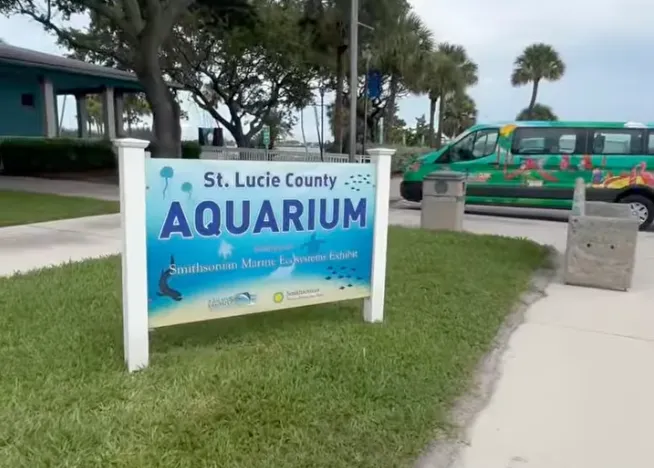
The St. Lucie County Aquarium is a public aquarium operated through a partnership between the St. Lucie County Board of County Commissioners and the Smithsonian Marine Station in Fort Pierce, which is a research facility of the Smithsonian Institution’s National Museum of Natural History in Washington, D.C.
The aquarium opened in November 2001, when the Smithsonian’s main 3,000-gallon coral reef exhibit was retired from its 20-year display at the National Museum of Natural History. Smithsonian scientists were the first to put a living model of an Atlantic coral reef ecosystem on public display, and that same landmark exhibit now anchors the Fort Pierce aquarium.
The facility sits within Museum Pointe Park on Seaway Drive, adjacent to the St. Lucie County Regional History Center. It is managed in partnership with the Smithsonian Marine Station, which continues to conduct active research on marine biodiversity and the Indian River Lagoon.
View this post on Instagram
Plan Your Visit
📍Address: 420 Seaway Drive, Fort Pierce, FL 34949
📞 Phone: 772-462-3474
🅿️ Parking: Free parking available at Museum Pointe Park
⏱️ Typical Visit Length: 30 minutes to 1 hour
🌐 Learn More: St. Lucie County Aquarium
Hours of Operation
| Day | Hours |
|---|---|
| Tuesday – Saturday | 10:00 AM – 4:00 PM |
| Sunday | 12:00 PM – 4:00 PM |
| Monday | Closed |
General Admission
| Visitor Type | Price |
|---|---|
| Adults | $5.00 |
| Seniors (55+) | $4.00 |
| Children ages 4–17 | $4.00 |
| Children ages 3 and under | Free |
Joint Tickets (Aquarium + St. Lucie County Regional History Center)
Combine your aquarium visit with a stop at the adjacent St. Lucie County Regional History Center for a discounted joint ticket.
| Visitor Type | Price |
|---|---|
| Adults | $8.00 |
| Seniors (55+) | $6.00 |
| Children ages 4–17 | $5.00 |
Group Rates
Discounted group rates are available for school field trips and community organizations. Both tax-exempt and non-tax-exempt rates apply. Contact the aquarium directly at 772-462-3474 to arrange group reservations.
Free Admission Day
The first Tuesday of every month is free admission for all visitors. This is a great option for budget-conscious families or repeat visitors. Arrive early, as turnout is higher than on a typical weekday.
Getting There & Parking
The aquarium is located inside Museum Pointe Park at the South Causeway on Seaway Drive. Free parking is available on-site. After your visit, the park offers waterfront walking paths, picnic pavilions, a playground, and scenic views of the Indian River Lagoon, making it easy to extend your outing to a half-day.
Insider Tips
- Best time to visit: Midweek mornings see the fewest crowds.
- Free day: The first Tuesday of each month.
- Pair your visit: A joint ticket covering the aquarium and the St. Lucie County Regional History Center next door is available at a discounted rate.
- Bring your phone: Each exhibit has a QR code linking to a free Smithsonian educator video about that ecosystem.
What’s Inside the Aquarium
The Six Living Ecosystem Displays
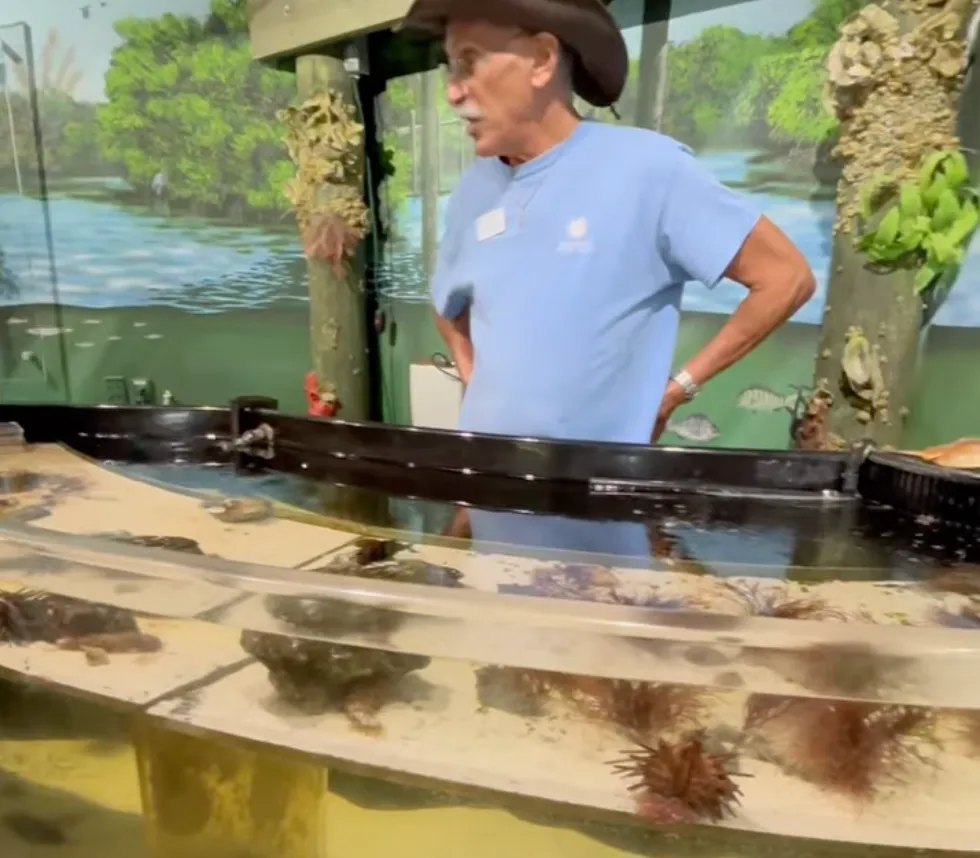
The aquarium’s core exhibits are living models of six Florida marine and estuarine ecosystems, each accurately reflecting habitats found in the Indian River Lagoon and the surrounding coastal waters of Florida’s east coast.
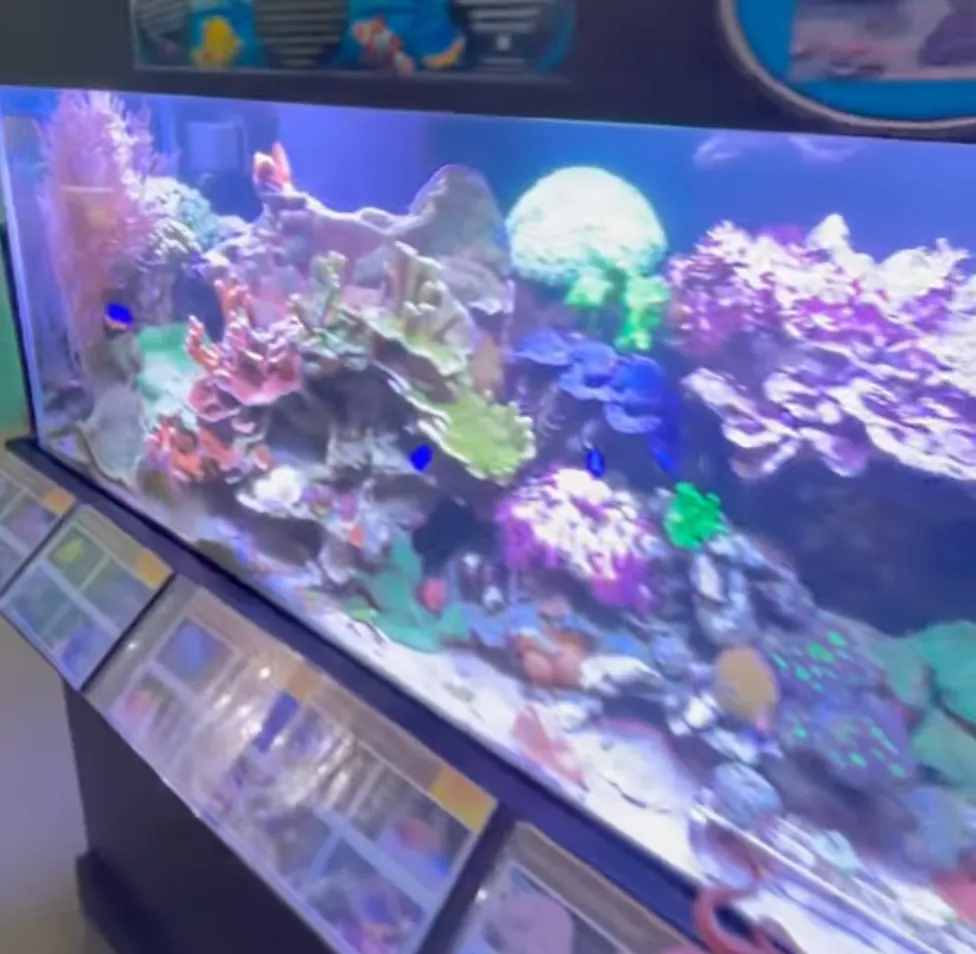
- Caribbean Coral Reef — The largest and most iconic display. This 3,000-gallon living model features more than 20 species of live corals and was originally displayed at the Smithsonian’s National Museum of Natural History in Washington, D.C. for two decades before coming to Fort Pierce.
- Seagrass Habitat — A living model of the seagrass beds found throughout the Indian River Lagoon, home to a wide range of fish, invertebrates, and other marine life that depend on this critical coastal ecosystem.
- Mangrove Habitat — showcases the mangrove forest ecosystem, one of Florida’s most important coastal environments for juvenile fish, birds, and water quality.
- Lagoon Hardbottom Habitat — Models the hard-bottom communities found in the Indian River Lagoon, a distinct ecosystem supporting species not found in open-water or reef environments.
- Nearshore Reef Habitat — Represents the reef communities found close to shore along Florida’s Atlantic coastline.
- Deepwater Oculina Coral Reef — Features the rare and federally protected Oculina coral reef, a deep-water habitat unique to Florida’s east coast.
Touch Tank
A popular highlight for all ages, the touch tank allows visitors an up-close encounter with live local marine animals including horseshoe crabs, sea stars, and peppermint shrimp. Peppermint shrimp are known for cleaning visitors’ fingernails, which is a fun, interactive moment for kids and adults alike.
Microscope Displays & Education Station
Several smaller exhibits give visitors a window into the microscopic world of marine ecosystems. The Education Station, located near the touch tank, features self-guided activity materials for kids, distance learning information, and educational resources to extend the visit beyond the aquarium walls.
QR Code Tour
Each ecosystem displays a QR code linking to a short video about that exhibit hosted by a Smithsonian educator. This is a self-guided audio-visual layer available to visitors with a smartphone at no extra cost.
Gift Shop
A small gift shop on-site carries marine-themed items.
The Smithsonian Marine Station
The Smithsonian Marine Station (SMS), a working research facility, is one of only a handful of Smithsonian field stations in the world. It specializes in marine biodiversity and ecosystem research, with a focus on the Indian River Lagoon and Florida’s east central coastal waters. Scientists and students from the Smithsonian and collaborating institutions around the world come here to study the plants, animals, and physical processes of the ocean and lagoon.
The Station is distinct from the public aquarium but directly connected to it. Smithsonian marine science educators staff the aquarium, lead tours, and develop its exhibits. The research conducted at the SMS informs much of what visitors see and learn during their aquarium visit.
Free public tours of the Smithsonian Marine Station are available on the 3rd Thursday of each month by reservation. Reserve a spot by calling (772) 462-6216.
Group & Educational Programs
The aquarium offers structured programs for school groups, community organizations, and families through the Smithsonian Marine Ecosystems Exhibit (SMEE). All programs are led by Smithsonian marine science educators.
Aquarium Tour & Behind-the-Scenes Tour
Guided tour of all six living ecosystem displays followed by a visit to the aquarist laboratory and a touch tank session.
- Length: 1 hour
- Price: $75 per group
- Participants: 10–20
- Ages: 6 and older
- Registration: Required one week in advance
Self-Guided Tour & Scavenger Hunt Program
A marine science educator introduces the exhibits, then kids complete a scavenger hunt challenge through each ecosystem display, finishing with a touch tank visit.
- Length: 1 hour
- Price: $75 per group
- Participants: 10–20
- Ages: 5–15 (1 adult per every 5 children required)
- Registration: Required one week in advance
Public Programs
The aquarium offers ongoing public educational programs for children, families, and seniors. Programs rotate monthly. Check the aquarium’s events calendar for current offerings, including Aquarium After Dark evening events held seasonally.
Volunteer Opportunities
The aquarium maintains an active volunteer program. Current volunteer positions include Touch Tank Interpreter, Aquarium Guide, Husbandry and Animal Care, Feeding Specialist, and Special Projects Volunteer. Visit the aquarium volunteer page to apply.
Frequently Asked Questions
What is the connection between the aquarium and the Smithsonian?
The aquarium is a partnership between St. Lucie County and the Smithsonian Marine Station, a field research facility of the Smithsonian Institution’s National Museum of Natural History. Smithsonian educators staff the facility and develop its exhibits and programs. The centerpiece coral reef exhibit was displayed at the National Museum of Natural History in Washington, D.C., for 20 years before coming to Fort Pierce.
Is the aquarium good for young children?
Yes. The touch tank with horseshoe crabs, sea stars, and peppermint shrimp is a consistent highlight for young visitors. The exhibits are well-labeled, and the staff is noted for their patience and engagement with children of all ages. Children 3 and under are admitted free.
Is there free admission?
Yes. The first Tuesday of every month is free admission for all visitors.
How long does a visit take?
Most visits last between 30 minutes and 1 hour. Adding a walk through Museum Pointe Park or a visit to the adjacent history center can extend the outing to a half-day.
Does the aquarium offer school field trip programs?
Yes. Guided tours, behind-the-scenes tours, and scavenger hunt programs are available for groups of 10–20, all led by Smithsonian marine science educators. Registration is required one week in advance. Contact the aquarium at 772-462-3474 for availability.