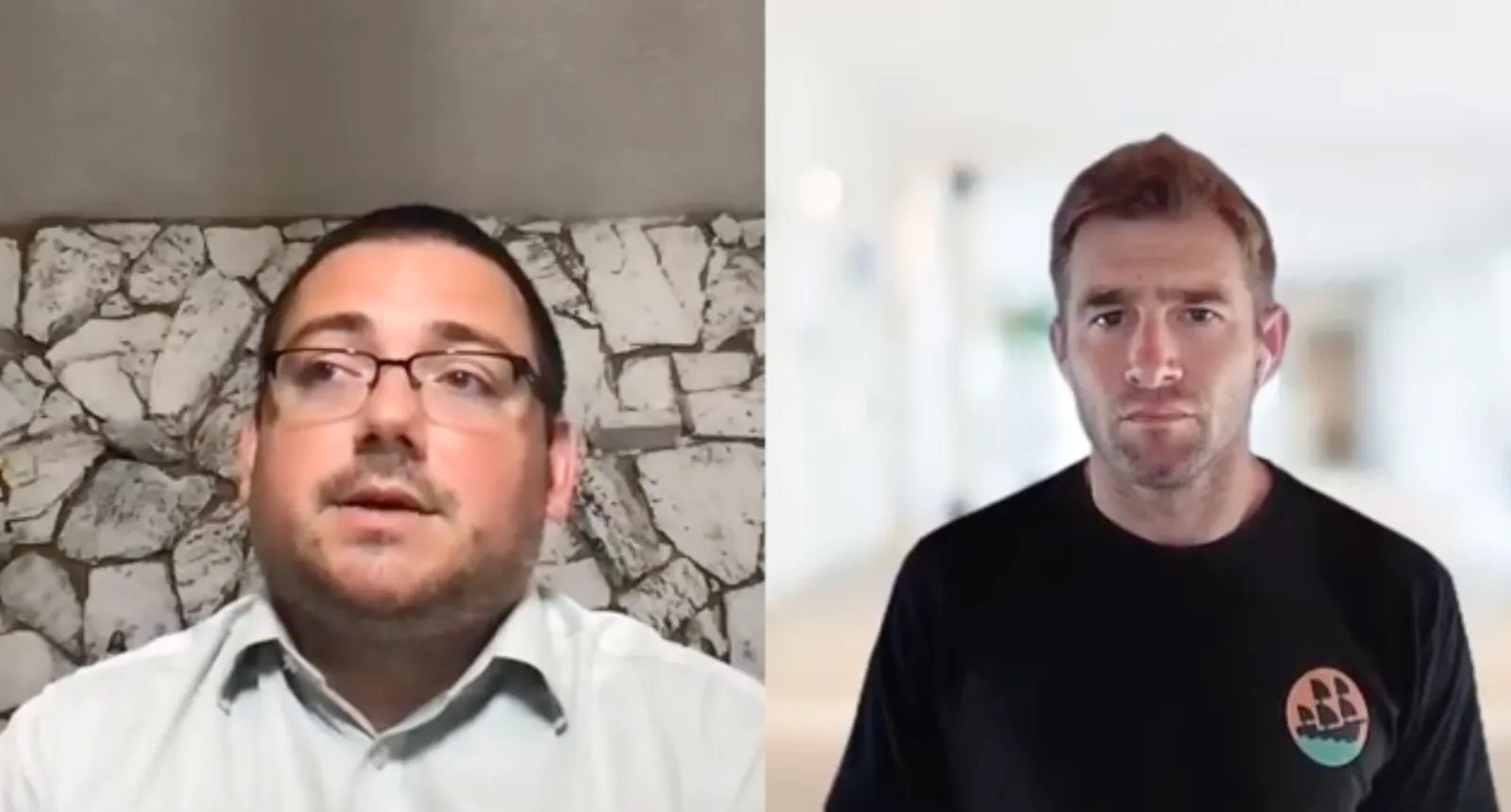
Shannon Martin has served as Mayor of Port St. Lucie for the past five years and on the city council since 2010, first as a district representative and later as vice mayor. She is running for reelection this year.
Why He’s Running
Giordano said he had no prior interest in politics but decided to run after growing frustrated with what he described as wasteful spending and a lack of accountability under the current administration. He pointed to the number of active construction projects underway in the city and argued that several of them have run significantly over budget. He said the city’s mayoral election, which is nonpartisan and open to all registered voters including independents, will take place August 18.




Adapting to Rapid Growth
Martin said the city’s priorities have shifted significantly during her time in office as Port St. Lucie has absorbed a substantial wave of new residents in a short period. She said balancing the expectations of longtime residents with those of newer arrivals has become a central part of her role, and that growth has touched nearly every part of city operations, from infrastructure and utilities to stormwater management and public safety. She noted that the pace of new residents moving to the city has slowed somewhat over the past year compared to prior years, which she attributed in part to broader economic conditions like interest rates rather than local policy.
Growth and the Limits of Local Control
Martin said much of the city’s growth is shaped by legal constraints tied to how Port St. Lucie was originally platted decades ago. Because many individual lots were already designated for single-family homes and granted development rights years before her time in office, she said the city cannot retroactively restrict what property owners are legally entitled to build. She said the city’s approach instead focuses on managing that growth as responsibly as possible within those existing constraints.
Infrastructure & Road Projects
Martin outlined several road and intersection projects underway or planned, including improvements at the Gatlin Boulevard and Savona Boulevard intersection, work on Village Parkway near Tradition, the final phase of PSL Boulevard South, and previously studied improvements to St. Lucie West Boulevard. She also pointed to planned roundabouts at several intersections, arguing that roundabouts reduce right-angle collisions and improve traffic flow compared to standard signalized intersections. She said long-range planning for infrastructure projects extends years into the future because of the design, engineering, and funding coordination required before construction can begin.
Economic Development at Walton and US One
Martin described redevelopment plans around the Walton Road and US 1 corridor, anchored in part by the city’s planned soccer stadium, as a catalyst intended to draw additional hotels, retail, and workforce housing to the area rather than a standalone project. She also pointed to LactaLogics, a human milk processing and distribution facility that established operations in the former Liberty Medical building, as an example of new economic activity on the city’s east side. She said the city’s broader Southern Grove jobs corridor has brought a range of employers to the area, a priority she said grew directly out of resident feedback in the city’s original 2014 strategic plan calling for more local job opportunities.
TreasureCoast.com has covered the Walton and One redevelopment in a previous episode on the Port St. Lucie soccer stadium project.
Public Safety Initiatives
Martin said Port St. Lucie has consistently ranked among the safest cities in Florida, and pointed to a police training facility she championed as one investment supporting that record. She said the facility allows officers to train locally rather than traveling to shared regional facilities, reducing overtime costs and allowing outside trainers to come to the city instead. She also described a drone first responder program that dispatches drones to calls ahead of patrol officers in some cases, saying it has already contributed to at least one successful welfare check, and a real-time public safety operations center intended to give officers better visibility into conditions at intersections throughout the city.
On license plate reading cameras deployed throughout the city, Martin said the technology has helped investigators solve serious crimes and remains a tool the police department continues to use on public streets.
Parks & Green Space
Martin said the city has acquired a meaningful amount of land for future parks and green space since early last year, including the Rosser Lakes Preserve property, which she said the city chose to preserve rather than allow to be developed residentially after hearing from residents who wanted less residential density. She pointed to a city program, Naturally PSL Green Spaces and Places, created to identify and set aside additional properties for conservation and recreation going forward, and said the city continues to pursue conservation grants to help fund future acquisitions. More on the city’s parks and outdoor spaces is available on our Port St. Lucie things to do page.
How the City Budget Works
Martin walked through how the city’s budget process works, noting that the city’s budget documents are publicly available online along with an instructional video explaining how to read them. She also pointed to City University, a free multi-week program that walks residents through how city government and its budget process work.
She explained that increases in the city’s overall budget from year to year often reflect standard governmental accounting practices, such as transferring capital project funds into the operating budget once a project moves into construction, rather than new or unplanned spending. She said cost increases on individual capital projects generally track with broader inflation and rising construction costs across the industry.
Martin also explained the distinction between two funds that are sometimes conflated: a larger investment portfolio the city uses to manage public funds while determining how to allocate them, and the smaller reserve fund levels the city is required to maintain under its own financial policy. She said maintaining strong investment and reserve practices helps the city secure favorable credit ratings from major bond rating agencies when it needs to borrow for future projects.
She also pointed to a website transparency award the city received from Granicus as an example of the city’s efforts to make budget and government information more accessible to residents.
Parks, Green Space, and Land Acquisition
Martin said the city has acquired a meaningful amount of land for future parks and green space since early last year, including the Rosser Lakes Preserve property, which she said the city chose to preserve rather than allow to be developed residentially after hearing from residents who wanted less residential density.
Her Vision Going Forward
Looking ahead, Martin said her priorities if reelected include continuing the city’s public safety record, completing planned infrastructure and stormwater projects, expanding parks and green space, and continuing to reduce the city’s overall debt load. She pointed to recently completed or in-progress parks, including Stars and Stripes Park, Riverland Paseo Park, and Pioneer Park, along with ongoing work at Torino Regional Park and Tradition Regional Park, as recent examples of investments in residents’ quality of life.