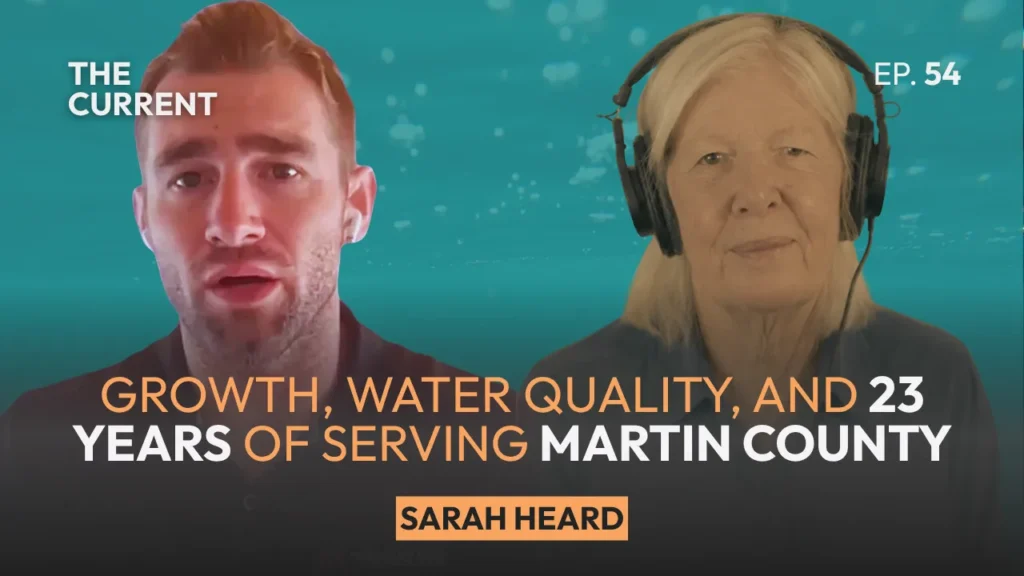
Sarah Heard has served on the Martin County Commission for 23 years and has lived in the county for 37 years. She is running for reelection to the District 4 seat. Heard said her core priorities, stopping overdevelopment, protecting clean water, and keeping taxes low, have remained largely unchanged since she first ran for office.
New Growth Pressures Since the Pandemic
Heard said Martin County has seen a significant wave of new residents since the pandemic, which she said has created a need to help newer residents understand the county’s approach to managing growth, protecting water quality, maintaining roads, and funding public safety.



The Property Tax Referendum
Heard said she plans to vote against a statewide property tax referendum on the November ballot, citing concerns about its effect on county revenue. She said Martin County relies heavily on residential property taxes, particularly from homesteaded properties, and that county estimates project the impact would grow substantially over the first several years if the measure passes, with a large share of the county’s budget tied to funding public safety.
Responsible Growth & the Comprehensive Plan
Heard said Martin County’s comprehensive plan, in effect since 1982, governs where and how growth is allowed, including the pace of development and the services required to support it. She said the plan can be amended by a majority vote of the commission, but that following its existing framework is what allows the county to manage growth responsibly.
Affordable Housing & Live Local Act Developments
Heard said the county generally responds to development applications rather than initiating housing projects itself, working in partnership with federal and state agencies, Habitat for Humanity, and a county land trust that evaluates surplus county-owned land for potential affordable housing use.
She also discussed the effect of Florida’s Live Local Act, which allows certain affordable housing developments to bypass local commission approval and move forward administratively. She said several Live Local applications are currently underway or under construction in District 4, including a project called Baron’s Landing on the site of a former golf course, and said she believes local governments should push back against what she described as the erosion of home rule authority over local land use decisions.
Decades of Water Quality and Everglades Restoration Work
Heard said her involvement in water quality issues began in 1998, following a period of severe fish kills and lesions in the St. Lucie River and Indian River Lagoon tied to large-scale discharges from Lake Okeechobee. She said that period contributed to the passage of the Everglades Forever Act in 2000 and, later, federal authorization of the Indian River Lagoon South restoration program in 2007, a joint state and federal effort focused specifically on water quality in Martin County.
She said the program includes several components already underway, including new reservoirs and stormwater treatment areas designed to remove nutrients from water before it reaches the estuary, a natural lands acquisition effort focused on wetlands and uplands, and a project aimed at removing accumulated sediment from the floor of the Indian River Lagoon. She said the county has also spent more than a decade moving homes off septic systems and connecting them to municipal sewer service to further reduce nutrient pollution.
TreasureCoast.com has covered related water quality efforts in a previous episode with the Florida Oceanographic Society.
How Residents Can Stay Informed
Heard said Board of County Commission meetings are recorded and archived online for public review, and that local newspapers continue to cover county government closely. She said she has also published a monthly email newsletter summarizing commission actions for several years, which residents can sign up to receive.
Growth Management, Brightline, and Quiet Zones
Heard said Florida once had a state agency, the Department of Community Affairs, that reviewed comprehensive plan changes statewide and required developers to fund additional road capacity when new projects would strain infrastructure in neighboring jurisdictions. She said the agency was eliminated roughly 15 years ago and has not been replaced, and that reinstating a similar growth oversight body would be her top priority for improving regional growth management.
On Brightline, Heard said she served on the commission when Martin County unsuccessfully sued to stop the rail line from passing through the county. As part of the resulting settlement, Martin County was selected as the location for a Treasure Coast station. Heard said she supports locating that station in downtown Stuart, and noted that either Martin County or Brightline can still withdraw from the station agreement before a mid-2027 deadline. She also defended the use of federal transportation funding generally, arguing that most forms of transportation infrastructure in the country rely on some level of federal support.
On quiet zones along the rail corridor, Heard said the commission unanimously declined to implement them roughly a year ago, but said she would support them in areas where intersection safety improvements are in place and residents in the affected area are supportive.
Her Vision for Martin County’s Future
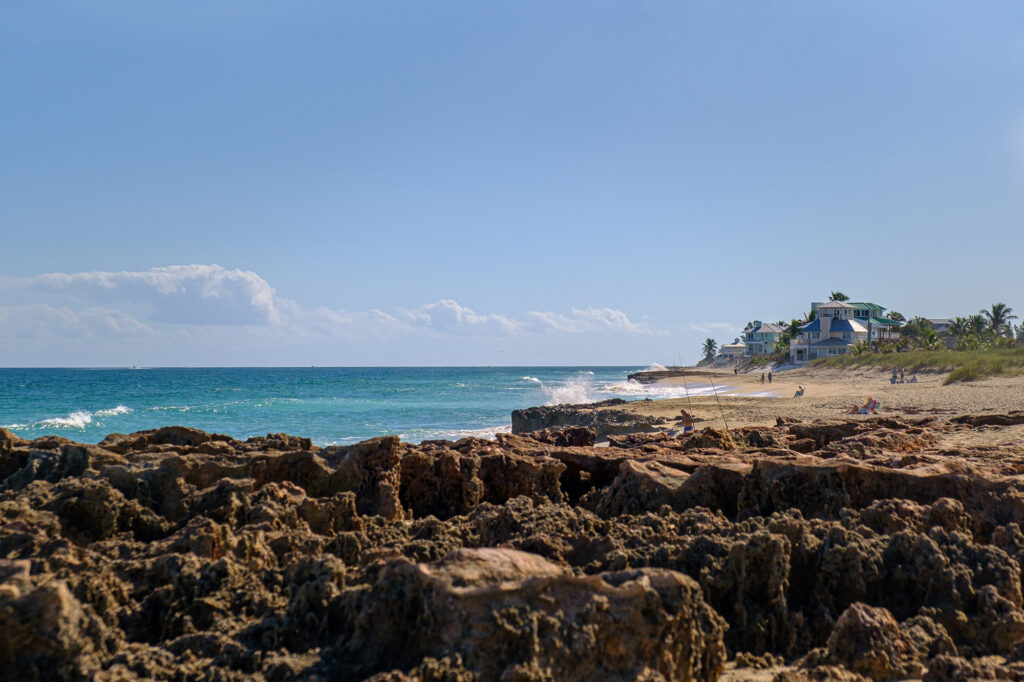
Asked what she hopes Martin County will look like decades from now, Heard described a future in which Hutchinson Island remains free of buildings taller than four stories, with the Indian River Lagoon’s water clear enough to see its sandy bottom through healthy seagrass beds, restoring its standing as one of the most biodiverse estuaries in North America.
Listeners interested in Martin County’s ongoing water quality efforts and upcoming elections can also find related coverage in TreasureCoast.com’s episodes on water issues ahead of local elections and with United Way of Martin County.
Voting in the race takes place on or before August 18. The election is open to all registered voters regardless of party affiliation.