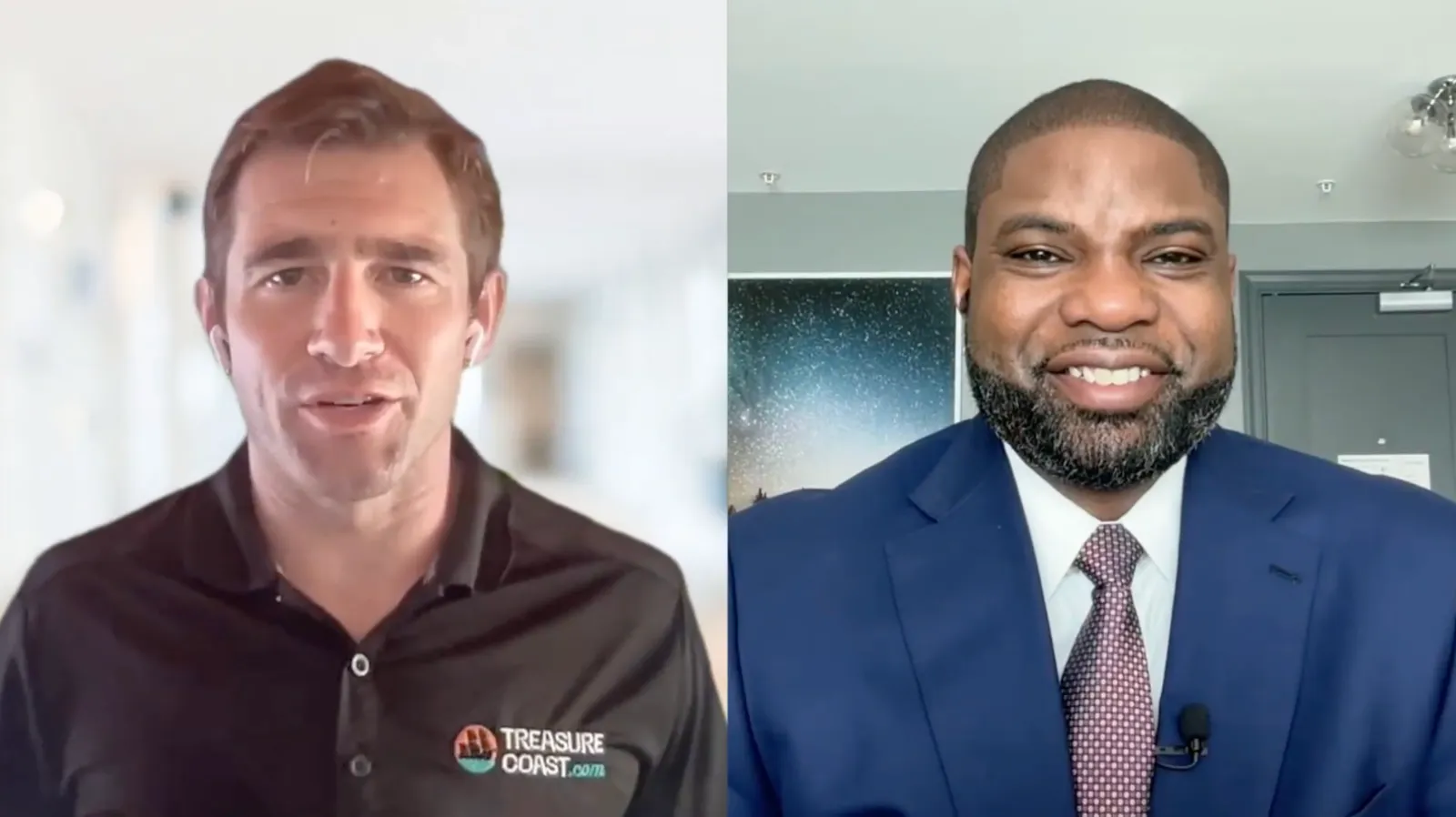
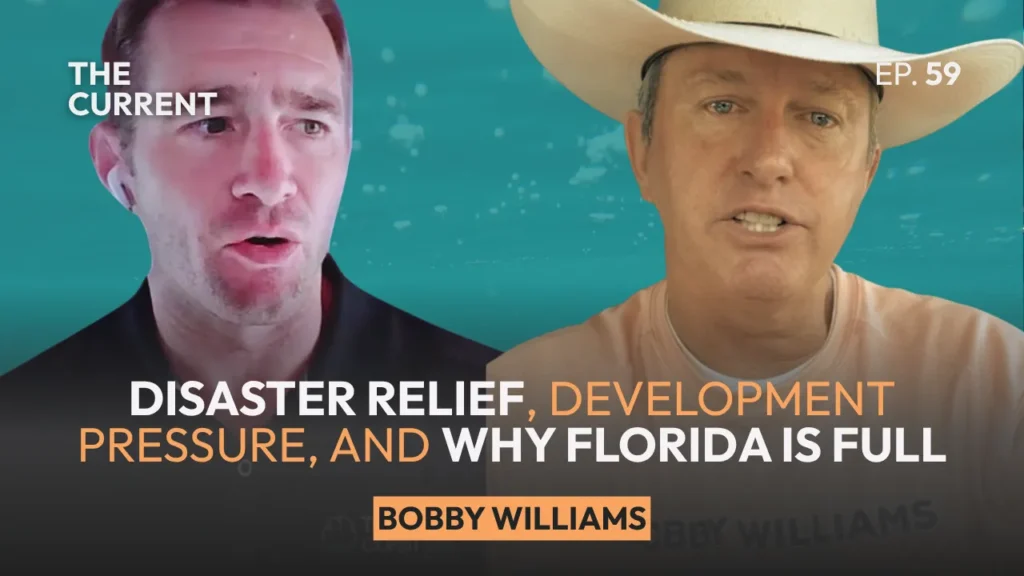
Bobby Williams is running in the 2026 Republican primary for Florida governor on a platform built around three themes: halting what he describes as unchecked development across the state, eliminating property taxes for Florida homeowners, and applying the disaster relief logistics experience he has built over the past decade to state government. A third-generation Floridian from Polk County, business owner, and pastor, Williams joined The Current by TreasureCoast.com to lay out his campaign.
Key positions Williams discussed in the conversation:
- Ending rezoning statewide to stop the conversion of agricultural land to development
- Opposing data center construction in Florida
- Eliminating property taxes for Florida homeowners
- Mandating timelines for insurance claim payouts and reforming state regulatory boards
- Bringing trade instruction into high school curriculum starting in ninth grade
- Reducing waste in state disaster response through better logistics coordination



From Disaster Relief to a Run for Governor
Williams described growing up in poverty in Winter Haven, starting a business in his twenties, and later founding the Freedom Tour, a food and disaster relief nonprofit, in 2016. He said the organization now moves a substantial volume of food and relief supplies each month and has distributed a large amount of donated product across Florida, working with sheriff’s departments, emergency operations centers, nonprofits, churches, and other partners.
He said he did not seek political office and initially resisted the idea, but came to believe the state needs candidates who are not career politicians. He also serves as chair of a local community redevelopment agency in Polk County, which he cited alongside his relief work as relevant government experience.
Disaster Response and Logistics
Williams argued that his most direct qualification is logistical. During COVID, he said, his organization worked with hundreds of agencies to move food and supplies to prisons, jails, sheriff’s offices, and communities across Florida. During hurricanes, he said he built a distribution network that receives incoming tractor-trailers and redistributes goods by box truck to partners that lack forklifts or loading capacity.
He was pointed out waste he has seen in official disaster response. Williams described a case after a recent hurricane in which multiple truckloads of bedding sat outdoors for an extended period and were slated to be discarded, and another in which the state had difficulty finding any partner willing to take truckloads of bottled water being cleared from a warehouse. In both cases, he said, his organization stepped in. His diagnosis is that the state lacks the partnerships and logistics awareness to move donated goods quickly, and that outside vendors have little financial incentive to be efficient.
Readers on the Treasure Coast can find local storm resources on TreasureCoast.com.
Growth, Rezoning, and “Florida Is Full”
Williams was sharply critical of large-scale development in Florida, arguing that national developers have built rapidly without regard for traffic, infrastructure, or long-term consequences. He pointed to changes made to state growth management law earlier in the 2010s, which he said reduced the infrastructure requirements developers must satisfy before building, leaving the state well behind on roads, schools, and utilities.
His central proposal is direct: end rezoning. Williams said land currently zoned for agriculture or low-density use should stay that way, which he argued would both stop the conversion of farmland and reduce the financial pressure on landowners to sell.
He also raised concerns about water supply, criticizing the practice of treating wastewater and returning it to aquifers and rivers, and argued that Everglades restoration illustrates a broader pattern in which the public pays to repair damage that private interests profited from causing.
Williams said he wants Florida to remain self-sufficient in food and water, calling for renewed support for cattle ranching, citrus, and agriculture rather than continued residential and commercial expansion.
Data Centers and AI
Asked directly about data centers, Williams said he opposes them in Florida. He cited four concerns: the amount of land they consume, the water they require, the disposal of contaminated water, and what happens to the facilities when the technology changes and operators leave, which he argued would leave cleanup costs and landfill impacts to taxpayers.
He also expressed broader skepticism about artificial intelligence, arguing it threatens small and family-owned businesses and concentrates economic power in a small number of large companies.
Listeners interested in how other Treasure Coast leaders have approached growth and development pressure may want to hear TreasureCoast.com’s conversation with former Stuart mayor Chris Collins.
Property Taxes and Government Spending
Williams said his goal is to eliminate property taxes entirely. He argued that local governments have not meaningfully reduced spending when asked to, and in some cases have increased it, so the only effective approach is removing the revenue rather than requesting restraint.
He framed the issue around generational wealth, saying residents who inherit homes sometimes cannot afford to keep them because of the tax burden, forcing families to sell property that has been passed down. If you buy something, he said, you should own it.
He was skeptical of ballot measures on the subject generally, arguing that proposals often begin with strong intentions and get weakened through the drafting process by lobbying interests.
Housing Affordability and Insurance
On housing affordability, Williams pushed back somewhat on generational framing, saying housing has been difficult to afford in every era and that wages and prices have moved together over time. He did point to institutional investors purchasing large volumes of homes as a distortion in the current market, along with the surge of new residents moving to Florida in recent years.
Insurance drew some of his strongest criticism. Williams said the governor appoints the boards that oversee insurance and utility rate decisions, and argued those boards rarely deny rate increases because of the political relationships involved. His proposals include mandating that insurers pay valid claims within a set timeframe, and creating alternatives to traditional coverage, including a self-insurance savings mechanism and required equity lines of credit from mortgage lenders so homeowners can access repair funds immediately after a storm rather than waiting on a claim.
Trade Education in Schools
Williams called for reducing standardized testing and adding practical instruction to Florida’s high school curriculum. His proposal would have all ninth-grade students rotate through trades including air conditioning, electrical, plumbing, and home maintenance, then specialize over the following three years.
He said graduates should leave high school with a marketable skill, an understanding of how to enter a trade at better than entry-level pay, and practical knowledge about business formation and licensing. He also said he wants discipline and life skills instruction restored in schools, and, as a pastor, a greater role for religion in education.
Williams’ Vision for Florida’s Future
Asked what Florida should look like in a decade or two, Williams said the goal is preservation rather than transformation. He wants the state to remain rooted in ranching, citrus, and agriculture, to protect its tourism economy by keeping beaches, rivers, and springs clean and accessible, and to expand public access to hunting land and outdoor recreation. He said he opposes efforts to reposition Florida as a financial or technology hub.
He also proposed several structural changes, including limits on political action committee spending in state races, restrictions on lawsuits he believes limit outdoor recreation access, and waiting periods before new residents could vote or claim homestead benefits, an idea he acknowledged he is unsure would survive constitutional review. He said he would also seek to classify voter fraud as treason with severe criminal penalties.
Throughout the conversation, Williams returned to a single framing: that state government has been captured by lobbyists and large corporations, and that his campaign is about returning decision-making to residents.
Voters can learn more about Williams at bwflgov.com. For more conversations with candidates in Florida’s 2026 races, visit The Current by TreasureCoast.com.