Treasure Coast Snorkeling At a Glance
- Best spots span all four counties, from Hutchinson Island reefs to Fort Pierce Inlet to Vero Beach wrecks
- Top experiences include nearshore coral reefs, historic shipwrecks, and Indian River Lagoon exploration
- Best conditions occur spring through fall, with summer offering the warmest, clearest water
- Skill levels range from beginner-friendly tidal pools to advanced wreck dives
- Gear rentals are available locally at multiple outfitters across the region
Why the Treasure Coast Is One of Florida’s Top Snorkeling Destinations
Treasure Coast snorkeling delivers one of the most varied underwater experiences in all of Florida, combining natural reef systems, documented shipwreck sites, and a living estuary that few coastal regions can match. Martin County, St. Lucie County, and Indian River County each contribute something distinct to the snorkeling landscape here. The result is a destination where beginners and experienced divers alike find compelling reasons to get in the water.
The region’s name is no accident. Spanish treasure fleet ships from 1715 wrecked along these shores, and remnants of that history still sit on the ocean floor. Snorkeling here is equal parts natural discovery and living history lesson. Warm Atlantic waters, consistent visibility, and accessible entry points make this one of the most approachable snorkeling destinations on Florida’s east coast.
What separates the Treasure Coast from more heavily marketed snorkeling destinations is the diversity packed into a relatively compact stretch of coastline. You can snorkel a shallow tidal reef in the morning, explore a nearshore wreck by afternoon, and paddle out to an estuary site before sunset, all within the same county.

Martin County Snorkeling Spots
Bathtub Reef Beach
Bathtub Reef Beach is the defining snorkeling landmark of Martin County and one of the most distinctive beach environments on the entire Treasure Coast. Located on the south end of Hutchinson Island, this site sits at a rare convergence of Atlantic beach, a shallow offshore reef, and the Indian River Lagoon estuary. The reef acts as a natural barrier, creating a calm, protected pool of water that earned the “bathtub” nickname.
At low tide, the exposed reef creates tidal pools filled with small fish, invertebrates, and marine grasses. Snorkelers can explore the reef edge where Atlantic water pushes through and encounter a surprisingly active ecosystem for such a shallow environment. The 1,300-foot undeveloped beach keeps the setting natural and uncrowded compared to more commercial snorkeling sites.
This spot is ideal for families with children, beginners building confidence in the water, and anyone wanting to combine a classic beach visit with genuine underwater exploration. The calm interior waters make clearing the mask and fin practice easy before venturing to the reef edge.
📍 MacArthur Boulevard, Stuart (south end of Hutchinson Island)
🌊 Best Conditions: Low tide for tidal pools, incoming tide for reef snorkeling
🅿️ Parking: Limited lot on site, arrive early on weekends
🐠 Skill Level: Beginner to intermediate
Wreck of the Georges Valentine
Martin County’s artificial reef program has created several dedicated dive and snorkel sites off Hutchinson Island, with the Wreck of the Georges Valentine among the most notable. This documented wreck site draws snorkelers comfortable with slightly deeper water and stronger currents than the sheltered reef at Bathtub Beach. Marine life concentrations around artificial and natural hard-bottom structures in this area are consistently strong.
Martin County maintains a network of artificial reef dive sites that support fish populations and offer structured underwater environments for exploration. These sites function as productive marine habitats and accessible recreational dive spots, often within reasonable swim distance from shore access points.
View this post on Instagram
Jensen Beach Access Points
Jensen Beach provides additional nearshore reef access along the northern stretch of Hutchinson Island in Martin County. The rocky nearshore bottom in several areas along this stretch supports reef fish communities and provides snorkelers with natural hard bottom structure to explore. Conditions vary significantly by season and tide, so local knowledge about current conditions matters here.
St. Lucie County Snorkeling Spots
Fort Pierce Inlet and Jetty Park
The mouth of the Fort Pierce Inlet creates one of the most productive and reliable snorkeling environments in St. Lucie County. Jetty Park, positioned directly at this inlet, offers snorkelers access to clear Atlantic water that flushes consistently through the cut, supporting excellent visibility and abundant marine life. Reef fish, rays, and occasional larger pelagic species move through this zone regularly.
The rock jetty structures themselves become artificial reef habitat over time, hosting encrusting organisms, sponges, and the fish communities that depend on them. Snorkeling along the jetty walls reveals a vertical reef environment packed with color and life. Current awareness is critical at this site, as inlet flows can be strong depending on tidal stage.
📍 Fort Pierce Inlet State Park, North Causeway, Fort Pierce
⚠️ Current Warning: Snorkel during slack or early incoming tide only
🐠 Marine Life: Reef fish, rays, occasional sea turtles
🅿️ Parking: Fee-based lot at Fort Pierce Inlet State Park
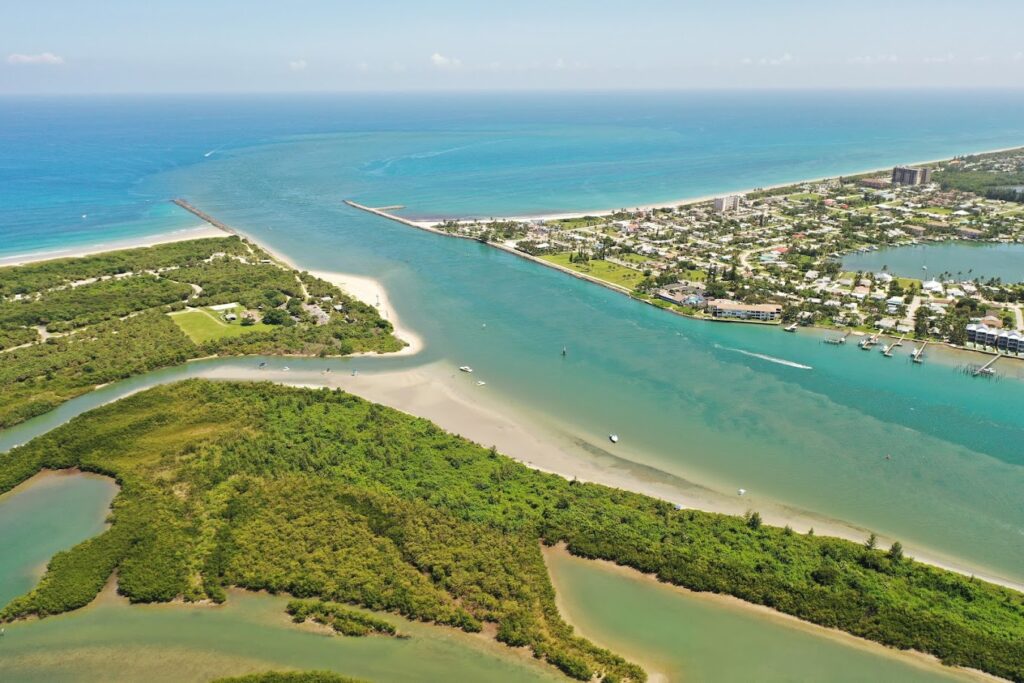
Fort Pierce Inlet State Park and Fort Pierce Inlet.
Avalon State Park
Avalon State Park on North Hutchinson Island in St. Lucie County provides beach access in a preserved, natural setting with nearshore snorkeling potential along its Atlantic shoreline. The undeveloped character of this park keeps visitor impact low and water quality high. It is a strong option for snorkelers who prefer less crowded conditions with a natural backdrop.
The park sits within the broader North Hutchinson Island coastal corridor, which includes protected habitat and relatively pristine nearshore reef structure. Snorkelers with experience navigating moderate surf will find the most success here.
📍 North Hutchinson Island, Fort Pierce
🌿 Setting: Undeveloped state park beach
🅿️ Parking: On-site lot with fee
🐠 Skill Level: Intermediate
The 1715 Fleet Wreck Sites
The most historically significant snorkeling in all of St. Lucie County, and arguably the entire Treasure Coast, involves the scattered remains of the 1715 Spanish treasure fleet. A hurricane destroyed this convoy of ships along a stretch of coastline that runs through what is now St. Lucie County and into neighboring counties. While salvage operations have claimed much of the original material, portions of the wreck structure and ballast stones remain accessible to snorkelers at certain sites in shallow water.
These are not curated, marked dive sites in every case. Accessing the most productive 1715 fleet snorkeling often requires local knowledge, guided tours, or research through historical records and dive operators familiar with the region. The experience of floating above a 300-year-old disaster site adds a dimension that purely natural reef snorkeling cannot replicate.
Indian River County Snorkeling Spots
The Boiler Wreck (SS Breconshire)
The SS Breconshire, locally known as the Boiler Wreck, is one of the most accessible and rewarding snorkeling destinations in Indian River County. Located approximately 300 yards from shore, this wreck is reachable by paddleboard or kayak from a beach launch point. The relatively short paddle makes it viable for snorkelers who are not strong open-water swimmers but are comfortable with basic watercraft.
Guided tours depart from the beach and combine the paddleboard or kayak component with snorkeling instruction and marine life identification. The wreck structure supports dense populations of reef fish and invertebrates, and visibility at this site is frequently excellent due to its nearshore position and the influence of clear Atlantic water. It functions as one of the most photogenic and accessible wreck snorkel experiences in the region.
View this post on Instagram
📍 Vero Beach area, Indian River County
🛶 Access: Paddleboard or kayak, approximately 300-yard paddle
🐠 Marine Life: Dense reef fish populations, invertebrates
🎯 Best Option For: Guided group snorkeling adventures
Sexton Plaza Beach
Sexton Plaza Beach in Vero Beach serves as a popular snorkeling access point with nearshore reef structure that rewards patient exploration. The site is centrally located within Vero Beach and offers convenient parking and facilities that make it a practical choice for day trips. Nearshore rocky bottom and reef patches provide structure that concentrates marine life within easy swimming distance from shore.
This spot consistently appears on regional snorkeling guides as a top producer for Indian River County, particularly for snorkelers looking for a straightforward beach entry with good potential for reef fish encounters. Morning visits before afternoon sea breezes pick up generally offer the best conditions.
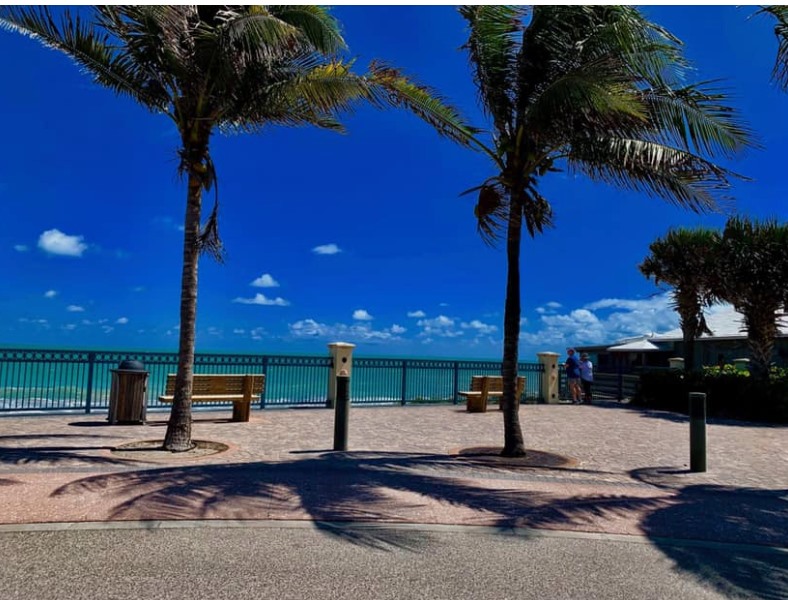
📍 Sexton Plaza, Ocean Drive, Vero Beach
🅿️ Parking: Public lot at plaza
🌊 Best Time: Morning, calm wind days
🐠 Skill Level: Beginner to intermediate
Indian River Lagoon Snorkeling
The Indian River Lagoon extends through Indian River County and offers a completely different snorkeling environment from the Atlantic reef sites. This estuary system supports seagrass beds, oyster bars, and mangrove shorelines that host a diverse community of juvenile fish, invertebrates, manatees, and shore birds. Visibility in the lagoon varies considerably by location and recent rainfall, but clear conditions in seagrass zones can be surprisingly good.
Paddleboard and kayak snorkeling tours operate within the lagoon, allowing visitors to cover ground and access remote mangrove islands not reachable from shore. The west-facing mangrove islands visible from certain causeways are popular paddle-access snorkeling destinations. Lagoon snorkeling is an excellent option when Atlantic surf and swell make ocean sites impractical.
View this post on Instagram
Practical Tips for Snorkeling on the Treasure Coast
Best Times and Conditions
Water clarity on the Treasure Coast peaks during the spring and summer months when onshore winds are lighter and wave energy is reduced. The months of April through August typically offer the most consistent conditions for nearshore reef snorkeling. Summer water temperatures in the upper 80s Fahrenheit eliminate any need for wetsuits, though a thin rash guard protects against sun and minor abrasion.
Tidal timing matters significantly at sites like Bathtub Reef Beach and the Fort Pierce Inlet. Low tide exposes reef structure and tidal pools at Bathtub, while slack tide at the inlet reduces dangerous currents. Checking a local tide chart before any snorkel outing is a basic safety practice every visitor should follow.
Morning sessions before afternoon sea breezes develop almost always produce better visibility and calmer surface conditions than afternoon snorkeling. A 9 a.m. entry time gives snorkelers the best chance of flat water and good light penetration for underwater photography.
Gear and Rentals
Quality mask fit is the single most important equipment factor for new snorkelers. A poorly fitting mask floods constantly and turns an otherwise excellent snorkeling site into a frustrating experience. Several local gear rental shops operate near major snorkeling sites, including Shark Bait Beach Gear Rentals in the Fort Pierce area. Renting before investing in personal gear is a smart first step.
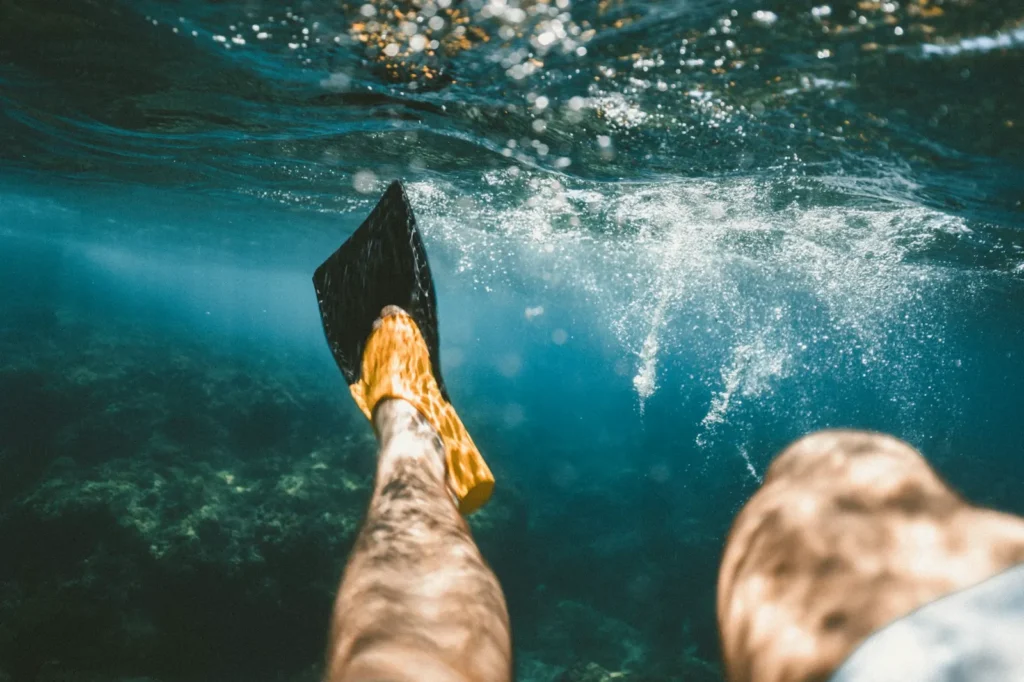
Full foot fins work well for beach entry snorkeling, where the walking distance to the water is short. Open heel fins with booties are worth considering for rocky entry points or sites requiring a longer shore walk. An underwater camera or GoPro mount adds significant value to wreck snorkeling sites where marine life concentrations are dense.
Safety Fundamentals
Never snorkel alone at any site on the Treasure Coast. Buddy snorkeling is the standard practice at all skill levels. Inlet and jetty sites carry real current risks that can move even strong swimmers quickly away from shore. Knowing your exit point before entering the water prevents panicked scrambles against a running tide.
A surface marker buoy (SMB) or dive flag is legally required in Florida when snorkeling in boating areas and strongly recommended at all open-water sites. This visible signal protects snorkelers from boat traffic, which is active year-round in these waters. Bright colors on fins and snorkel vests provide additional visibility from the surface.
Guided Snorkeling Tours on the Treasure Coast
Guided tours offer the fastest path to productive snorkeling on the Treasure Coast, particularly for visitors unfamiliar with local sites, currents, and marine life. Several operators across Indian River County and St. Lucie County run structured tours that combine equipment rental, transportation, and expert narration into a single package. Wreck tours to the SS Breconshire and reef tours off Hutchinson Island are among the most booked options.
Tours designed around paddleboard or kayak access to snorkel sites have grown in popularity because they expand the range of reachable locations beyond traditional beach entry spots. A guided paddle-snorkel tour can cover a mangrove island, a seagrass bed, and a shallow reef structure in a single morning outing, providing a comprehensive sampling of the region’s underwater environments.
For snorkelers interested specifically in the 1715 fleet history or other documented wreck sites, specialty guided tours with local historians and experienced underwater guides provide the context that makes these sites meaningful rather than just another pile of rocks on the bottom.
Frequently Asked Questions About Treasure Coast Snorkeling
What is the best snorkeling spot on the Treasure Coast for beginners?
Bathtub Reef Beach on the south end of Hutchinson Island in Martin County is the most beginner-friendly snorkeling site on the Treasure Coast. The natural reef barrier creates a calm, shallow pool with gentle conditions, excellent for first-time snorkelers and families with children. Low tide visits maximize tidal pool exploration without requiring any open-water swimming confidence.
Can you snorkel to a shipwreck on the Treasure Coast?
Yes. The SS Breconshire, known as the Boiler Wreck, is a snorkeling-accessible shipwreck located approximately 300 yards off the shore in Indian River County. It is reachable by paddleboard or kayak and is a popular guided tour destination. Additional wreck sites associated with the 1715 Spanish treasure fleet are accessible in shallow nearshore water along St. Lucie County‘s coastline.
What time of year is best for snorkeling on the Treasure Coast?
Spring through summer, specifically April through August, offers the most consistent water clarity and the calmest nearshore conditions for Treasure Coast snorkeling. Summer water temperatures reach the upper 80s Fahrenheit, eliminating the need for wetsuits. Mornings on low-wind days produce the best visibility at most reef and wreck sites.
Is the Indian River Lagoon good for snorkeling?
The Indian River Lagoon supports snorkeling in seagrass beds and around mangrove shorelines, offering a completely different experience from Atlantic reef snorkeling. Marine life including juvenile fish, invertebrates, and manatees inhabits the lagoon year-round. Visibility varies by location and conditions, but guided paddle-snorkel tours operating within the lagoon consistently find productive areas with clear water.
Where can I rent snorkel gear on the Treasure Coast?
Snorkel gear rentals are available from several local outfitters across the region. Shark Bait Beach Gear Rentals in the Fort Pierce area is one of the most prominent options for St. Lucie County visitors. Guided snorkel tour operators throughout Indian River County and Martin County also include equipment in their tour packages, making gear rental straightforward for visitors at most major snorkeling sites.