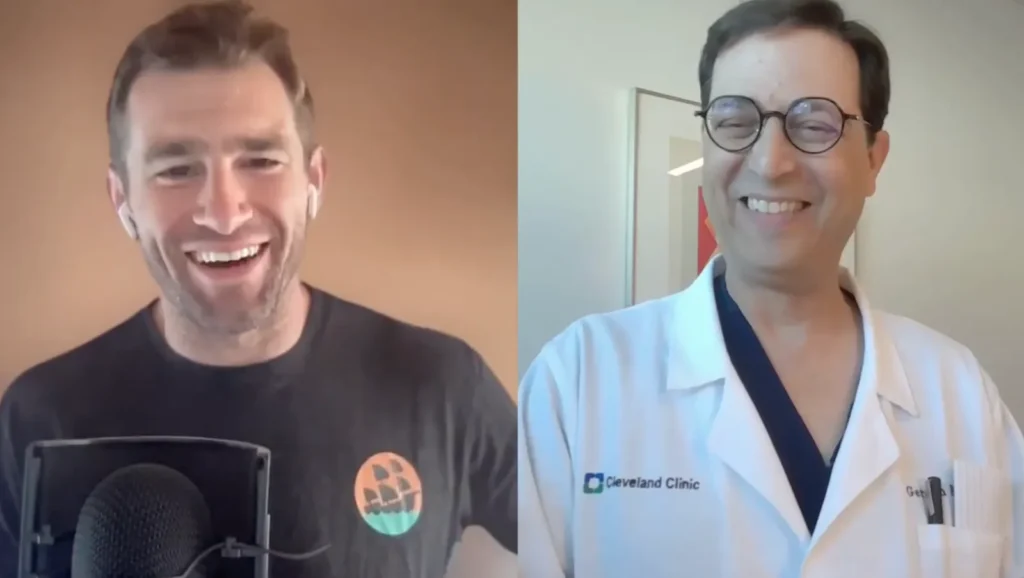
When a sports injury sidelines you, the path back to activity is rarely as simple as resting it off and hoping for the best. That was one of the central themes in a recent episode of The Current by TreasureCoast.com, where we sat down with Dr. Marc Silver, a board-certified orthopedic surgeon and sports medicine specialist at Cleveland Clinic in Martin County. The conversation covered a lot of ground, from the most common injuries Dr. Silver sees locally to what red flags patients tend to ignore. If you are an active person on the Treasure Coast, whether you are a high school football player, a weekend pickleball regular, or someone just trying to stay mobile, this episode has something worth hearing.
Who Is Dr. Marc Silver?
Dr. Silver completed his medical degree at Albert Einstein College of Medicine and his orthopedic residency at Maimonides Medical Center before completing a sports medicine fellowship at Yale University. He served as the team physician for Yale University Athletics, including the football program and the Beast of New Haven AHL hockey team. He now practices at Cleveland Clinic, seeing patients across multiple Treasure Coast locations, including Stuart, Tradition in Port St. Lucie, and Vero Beach. His clinical focus includes ACL reconstruction, rotator cuff repair, shoulder instability surgery, total knee and shoulder replacement, and arthroscopic procedures across multiple joints.



Who Does Sports Medicine Serve?
Dr. Silver was quick to clarify that sports medicine is not just for elite or young athletes. The goal of his specialty is to keep active people active across all age groups. In practice, that means he might see a high school basketball player with a knee injury in one room and a retiree with a torn rotator cuff from pickleball in the next. His patients range from adolescents recovering from injuries sustained in contact sports to older adults seeking to stay mobile and return to recreational activities they enjoy.
What Injuries Does He See Most Often on the Treasure Coast?
The type of injury depends heavily on the patient population, but Dr. Silver laid out a clear picture of what shows up most in his practice locally. For younger patients, football and basketball injuries dominate, often involving ligaments, joints, or overuse damage from jumping back into sports too quickly after time off. For older and more recreational patients, the list shifts toward:
- Shoulder injuries and rotator cuff tears
- Knee ligament damage, including ACL tears
- Hip injuries and fractures
- Ankle sprains and tendon injuries
- Pickleball-related falls leading to upper extremity fractures
Pickleball came up more than once. Dr. Silver noted it is among the most common sources of injury in the area right now, particularly for patients in their 50s and older. Falls during play can result in hip fractures, torn tendons, and shoulder injuries that require surgical intervention. Golf also carries its own risk profile. The mechanics of the golf swing place significant stress on the back, and Dr. Silver sees spinal injuries tied to the sport regularly. He also noted that golf cart falls represent their own separate category of injury worth acknowledging.
Why People Wait Too Long to Get Help
One of the most direct points Dr. Silver made was about delay. The most common reason patients come in later than they should is hoping the injury gets better on its own. He pointed to ACL injuries as a specific example. A knee that twists during a sport, swells briefly, and then feels manageable can still have a significant ligament tear underneath. Patients sometimes go years without addressing it because they have adapted to the instability. Over time, that unaddressed injury causes compounding damage to the joint. The same pattern shows up with shoulder instability. A dislocated shoulder that gets put back in place but is never properly treated can keep dislocating, wearing down the joint with each episode.
When Should You See a Specialist?
Dr. Silver outlined two broad scenarios where seeing an orthopedic sports medicine doctor makes sense. The first is chronic or nagging injuries. If something has bothered you for months or years and has never been properly evaluated, that is worth addressing. Adapted pain is not the same as healed tissue. The second is acute injuries with concerning signs. If you experience any of the following after an injury, Dr. Silver recommends getting it checked rather than waiting:
- Persistent or worsening pain that does not improve in a few days
- Swelling around a joint or extremity
- Limited range of motion
- Pain when bearing weight or moving in certain directions
- A feeling of instability or a joint giving out
- Numbness that does not resolve
He was direct about the threshold: if rest, ice, and over-the-counter anti-inflammatories are not moving the needle in a few days, that is a signal to get evaluated.
The Role of Physical Therapy in Recovery
Physical therapy came up repeatedly throughout the conversation, and Dr. Silver was consistent in describing it as a core part of the recovery process. Depending on the diagnosis, patients may go straight into physical therapy as the primary treatment, or they may have surgery first and then rely on PT to rebuild strength and mobility before returning to activity. Either way, rehab plays a central role in outcomes.
When asked about returning to sports, Dr. Silver described a graduated process. A patient does not go from post-surgical recovery to full activity overnight. He looks for minimal pain, full range of motion, appropriate strength, and endurance before clearing patients to return, and even then, the return is phased. A tennis player, for example, would start with limited swing practice rather than jumping back into full matches. Some injuries require close to a year of recovery before a patient is back at their pre-injury level. A complex knee reconstruction involving multiple ligaments can take nine to twelve months.
Advice for Families With Young Athletes
The discussion turned to adolescent athletes and what families can do to reduce injury risk. Dr. Silver’s advice was practical and straightforward:
- Warm up and stretch before any activity
- Wear appropriate protective gear, including helmets for e-bikes
- Gradually return to sport after any injury rather than rushing back
- Rest when tired, because many injuries happen at the end of a practice or game session
- Stay hydrated, especially in the Florida heat
- Avoid overuse by not stacking too many sports or activities at once
He flagged the start of the school year as a particularly high-risk period for overuse injuries. Kids who rested during summer and then immediately ramp back up into organized sports and recreational games are prone to stress injuries and joint problems from doing too much too soon. E-bikes drew specific mention. Dr. Silver said he has treated adolescents injured while riding, including falls and head injuries, and encouraged parents to enforce helmet use.
Where to Find Dr. Silver
Cleveland Clinic sees patients at multiple Treasure Coast locations: Stuart to the south, Tradition in Port St. Lucie, and Indian River in Vero Beach. Scheduled appointments are available, but the practice also accepts walk-in visits for more urgent concerns. The main scheduling number listed in the episode is 877-463-2010.
The episode is a practical and unfiltered look at sports medicine from someone treating patients on the Treasure Coast every day. Whether you are dealing with an old injury you have been managing around for years or a fresh one from the pickleball court, the conversation is worth your time. Listen to this episode of The Current wherever you get podcasts, including Spotify, Apple Podcasts, and YouTube.