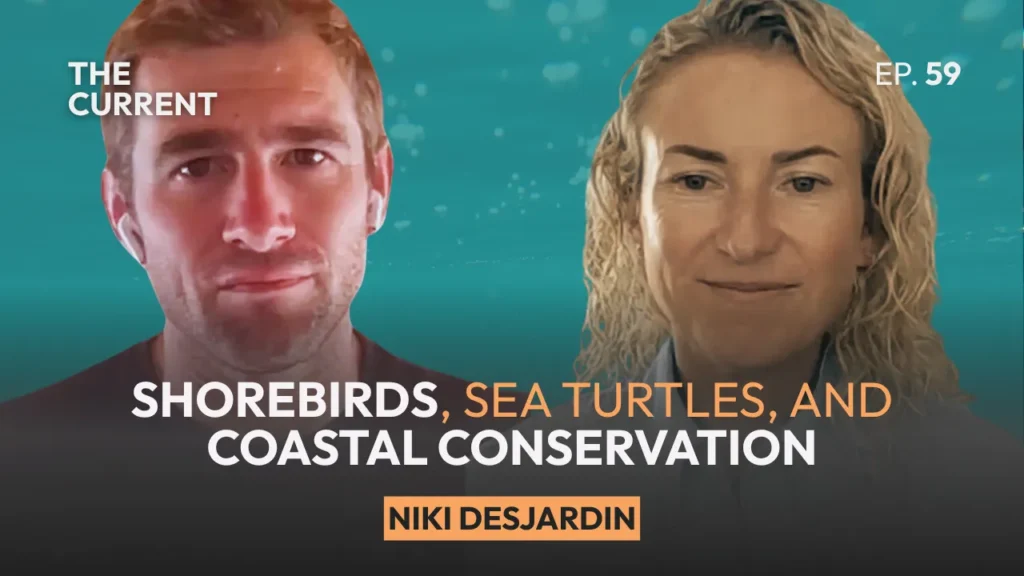
Niki Desjardin is the co-president and co-owner of Ecological Associates, an environmental consulting firm based in Jensen Beach that has operated on the Treasure Coast for more than 30 years. She also coordinates the local volunteer group of the Florida Shorebird Alliance, a program managed by the Florida Fish and Wildlife Conservation Commission, and recently became co-president of Audubon of Martin County. She joined The Current by TreasureCoast.com to talk about shorebird conservation, sea turtle work, and what beachgoers can do to protect the wildlife nesting at their feet.
Key topics Desjardin discussed in the conversation:
- The shorebird species Treasure Coast beachgoers commonly see
- Why some shorebirds now nest on gravel rooftops
- How to avoid disturbing camouflaged beach nests during breeding season
- What to do if you find an injured bird
- Ecological Associates’ consulting work across Florida and other states
- The sea turtle nest relocation effort during the Deepwater Horizon oil spill



The Shorebirds Hiding in Plain Sight
Desjardin said shorebirds rarely get the attention that sea turtles do, even though Florida serves as a critical migratory stopover for many species, some of them endangered or threatened, alongside a large population of year-round residents.
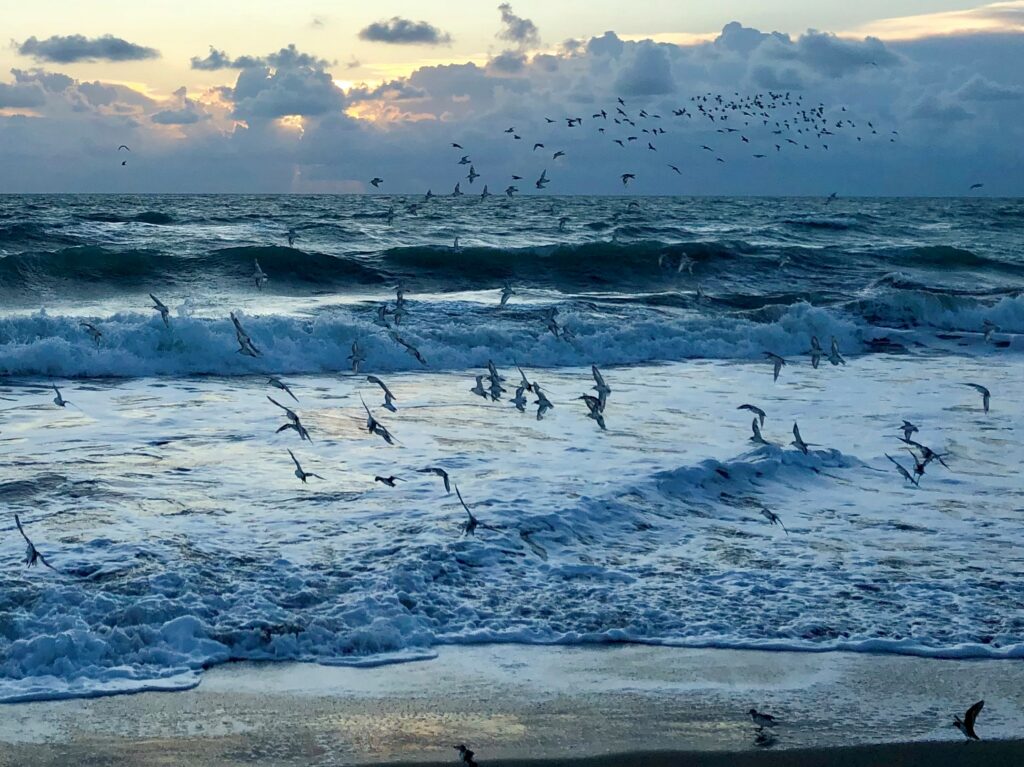
Among the birds beachgoers commonly see on the Treasure Coast are sanderlings and ruddy turnstones scurrying along the shoreline, black-bellied plovers, and willets, along with laughing gulls, ring-billed gulls, herring gulls, terns, and pelicans.
The local breeding season runs roughly April through August, overlapping with sea turtle nesting season. Some species, like least terns, only come to the area to breed, arriving to find suitable sites, raising their chicks, and moving on by late summer.
Why Shorebirds Nest on Rooftops
One of the more surprising parts of the conversation involved where shorebirds actually nest. Their natural nesting habitat is directly on the beach, but coastal development and human disturbance have pushed some birds to an unexpected alternative: rooftops. Older tar-and-gravel roof coverings resemble a beach surface, and shorebirds have adapted to use them.
The substitute is imperfect. Without barriers around a rooftop’s edge, chicks can fall off, and afternoon rains can wash chicks down gutters. Desjardin’s volunteer group monitors both beach and rooftop nesting sites in the county, and she said the group always welcomes new volunteers.
How Beachgoers Can Help
Shorebird nests are extremely difficult to spot. The birds lay speckled eggs directly into a shallow depression in the sand called a scrape, and the camouflage that protects eggs from predators also makes them easy for people to accidentally step on, or drive over on beaches that allow vehicles.
Desjardin offered a few simple guidelines:
- Stay away from the dunes and upper beach, where most nesting happens
- Avoid flushing birds, or causing them to repeatedly fly off, since migrating and breeding birds depend on the fat reserves they build while feeding here
- Keep dogs leashed, especially on beaches that are not designated dog beaches
She said the biggest threats facing shorebirds are human disturbance and coastal development, along with longer-term pressures from warming oceans that can shift where the birds’ food is found. Storms can also blow birds off course, as happened when hurricanes carried flamingos from Mexico into Florida in recent years.
For anyone who finds an injured bird, Desjardin recommended calling Martin County or St. Lucie County animal services and staying on site until they arrive. Those who can transport an animal themselves can bring it to Busch Wildlife Sanctuary in Jupiter or the Treasure Coast Wildlife Center in Martin County, and the FWC Wildlife Alert Hotline at (888) 404-3922 is available as well.
Audubon of Martin County and Public Education
As co-president of Audubon of Martin County, Desjardin said the organization’s focus extends beyond birds to the habitats they depend on. The group leads birding outings to sites managed by the water management district, helps lead scrub-jay tours at Jonathan Dickinson State Park, and runs youth and adult programs out of its Possum Long Nature Center in Stuart. Visitors can also stop in during the week, when docents are available for informal walks around the property.
For more ways to get outside locally, TreasureCoast.com’s guide to things to do in Stuart includes parks and nature spots across the area.
Environmental Consulting Across Florida and Beyond
Desjardin’s firm, Ecological Associates, works with both government and private clients on projects across the state. That work includes water quality sampling with coastal counties, seagrass and mangrove monitoring, living shoreline projects, gopher tortoise monitoring, and environmental permitting support for a local utility. She mentioned a recent project with Martin County at Twin Rivers Park in Rocky Point, home to an unusually dense gopher tortoise population.
The company also monitors sea turtles and shorebirds throughout Florida and has expanded to beach nourishment projects in North Carolina and Mississippi. Desjardin, who holds a master’s degree in biology and has more than 20 years of experience managing protected species programs, purchased the company with her business partner after the previous owner died in 2021.
The Deepwater Horizon Response
Asked about success stories, Desjardin pointed to her firm’s role in the response to the Deepwater Horizon oil spill. Working alongside the U.S. Fish and Wildlife Service and FWC, her team traveled to the Panhandle to help protect sea turtle nests across Florida and Alabama, participating in an unprecedented effort to relocate turtle eggs from the Gulf Coast to Florida’s east coast.
She said the collaboration among agencies, organizations, and longtime colleagues made the effort work, and those relationships have since led to projects in other states.
Listeners interested in more Treasure Coast conservation conversations may want to hear TreasureCoast.com’s episodes with the Florida Oceanographic Society and on statewide water policy.
A Closing Thought on How We See Nature
Desjardin closed with a broader concern: that nature does not always hold a place of importance in the general public’s perception. She said finding compromises between what people want to build and what ecosystems need is a duty, and one that requires responding to change responsibly and respectfully.
She also briefly encouraged residents to educate themselves ahead of the upcoming property tax vote, noting she has heard concerns from clients about how potential revenue changes could affect local conservation funding, while emphasizing she is still researching the issue herself.
More information about Ecological Associates is available at ecological-associates.com, and details on local programs and outings can be found through Audubon of Martin County.