
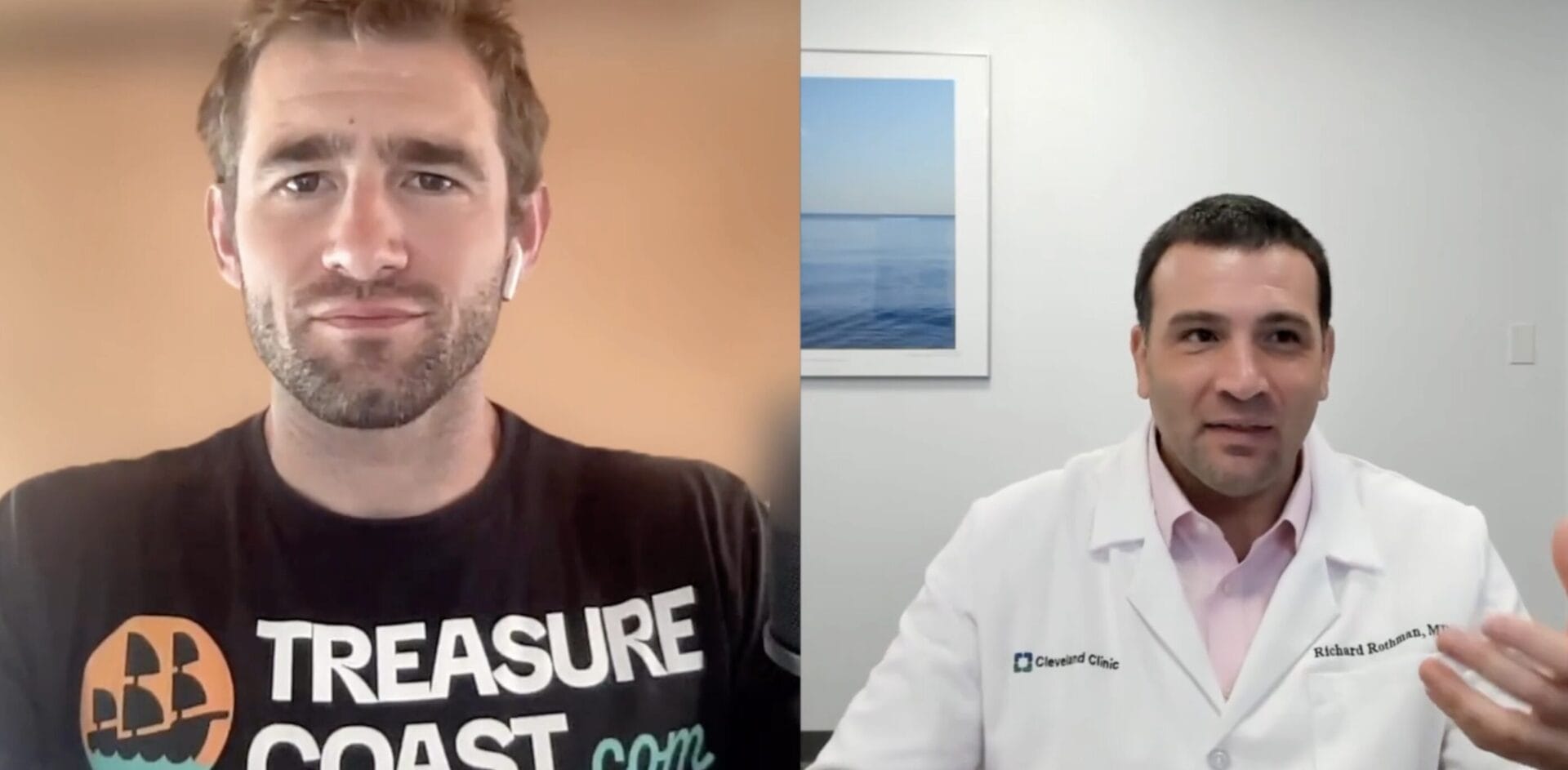
Dr. Richard Rothman, Vice President and Chief Medical Officer at Cleveland Clinic Indian River Hospital, joined The Current Podcast by treasurecoast.com to discuss maternity care, neonatal outcomes, and how the hospital is responding to broader community health needs in Indian River County and around the Treasure Coast.
Better Outcomes, Bigger Questions
One of the standout moments from the interview came early, when Dr. Rothman pointed to a specific statistic: babies delivered at Cleveland Clinic Indian River Hospital are 80 percent less likely to experience mortality compared to babies delivered elsewhere in Indian River County.
That’s not a marketing claim; it’s based on data from Healthy Start and reflects the hospital’s significant share of local deliveries, which accounts for roughly 75 to 80 percent of all births in the county.
According to Rothman, this outcome is the result of focused perinatal care, including early prenatal counseling and strong collaboration between obstetricians and pediatric teams. But he also noted that those numbers often get lost in broader conversations about patient satisfaction.
“Today, people measure their healthcare experience differently,” Rothman said. “It’s no longer just about survival or recovery. It’s about whether the phone was answered quickly or whether the food was warm.”



Labor and Delivery: Quality vs. Cost
Rothman was direct about a challenge facing hospitals everywhere: maternity care isn’t always financially sustainable. In many regions, including parts of Florida, hospitals lose money each year maintaining labor and delivery units, sometimes tens of millions.
Cleveland Clinic Indian River continues to invest in those services. The hospital is currently undergoing a $7 million renovation of its labor and delivery unit, a project designed to improve not just care quality, but also patient experience. Rothman credited the Indian River County Hospital District as a key partner in helping keep maternity care accessible.
“We’re not talking about profits here,” Rothman explained. “We’re talking about whether the hospital can continue offering this service without sacrificing others, like emergency care.”
View this post on Instagram
Why There’s No NICU
The hospital doesn’t currently have a Neonatal Intensive Care Unit (NICU), and Rothman addressed why. Based on current delivery numbers—about 1,200 to 1,300 babies per year—only about 4 percent would require NICU-level care. That’s roughly one case per week.
Rather than maintain an underutilized unit, the hospital partners with Nemours Children’s Health for transfers when advanced neonatal support is needed. Rothman said that if demand grows, a NICU could be on the table. But for now, the focus remains on avoiding preterm deliveries through early care and education.
📺 Watch Now: How Cleveland Clinic Tradition is Meeting Growing Demand with Dr. George Drake
Strength in Other Areas: Heart, Cancer, and Brain Health
While the discussion centered on maternity care, Rothman also shared updates on other areas where Cleveland Clinic Indian River is expanding.
The hospital currently operates Florida’s only three-star rated open-heart surgery program, with results that match or exceed national standards. On the oncology front, the hospital recently added five medical oncologists and three radiation oncologists. It also introduced a TrueBeam radiation unit that delivers more precise therapy with fewer side effects.
A Brain Health Center is also in development to support patients dealing with memory loss, Parkinson’s, and other neurological conditions—part of a broader effort to serve Indian River’s growing senior population.
Aging Population, Shrinking Workforce
One challenge Rothman highlighted was the mismatch between rising patient needs and the number of physicians entering key specialties. Fewer medical graduates are going into fields like oncology and neurology, just as demand is accelerating.
This, combined with an older population base, makes it harder for hospitals to meet demand quickly. Rothman said Cleveland Clinic is actively recruiting new providers to fill those gaps, but it remains an industry-wide issue.
View this post on Instagram
Insurance Frustrations and the Role of the Hospital
Healthcare delivery also comes with friction outside the hospital’s control. Rothman noted that hospitals are often blamed for problems that originate with private insurance companies—such as denied coverage or out-of-network claims.
“You’d never call one business to complain about another,” he said. “But in healthcare, that happens every day.”
He emphasized that Cleveland Clinic’s goal is to stay focused on care, while continuing to educate the public about how these systems work behind the scenes.
How Patients Can Stay Informed
When asked how residents can get better information about care options, Rothman kept it simple: talk to patients. He said word of mouth—particularly from people who’ve had successful experiences with labor, surgery, or cancer treatment—is often more reliable than what circulates on social media.
He also encouraged patients to speak directly with their doctors and care teams, noting that hospital staff are in the best position to answer questions about local services and outcomes.
View this post on Instagram
Expansion Based on Need, Not Optics
As for what comes next, Rothman was careful to say that expansion decisions are always driven by data. A NICU, for example, may be appropriate in the future—but only if the volume of need supports it.
“It’s like building a pool for someone who visits once a year,” he said. “We want to serve the real, ongoing needs of the community.”
That approach also applies to the hospital’s broader growth strategy. Rather than duplicating services that are already available nearby or underused, Cleveland Clinic Indian River is focusing on core areas where demand is rising: maternity care, cancer treatment, cardiac surgery, and cognitive health.
Final Thoughts
Throughout the conversation, Rothman returned to a central theme: outcomes matter. While the public discussion around healthcare often focuses on delays, billing, or insurance issues, the hospital remains focused on the quality of care it provides and how that care affects lives.
From maternity services with one of the region’s lowest infant mortality rates to advanced cardiac and cancer care, Cleveland Clinic Indian River is positioning itself as a long-term healthcare provider for a growing and changing community.
The full interview with Dr. Richard Rothman is available on Spotify, Apple Podcasts, YouTube, and treasurecoast.com.