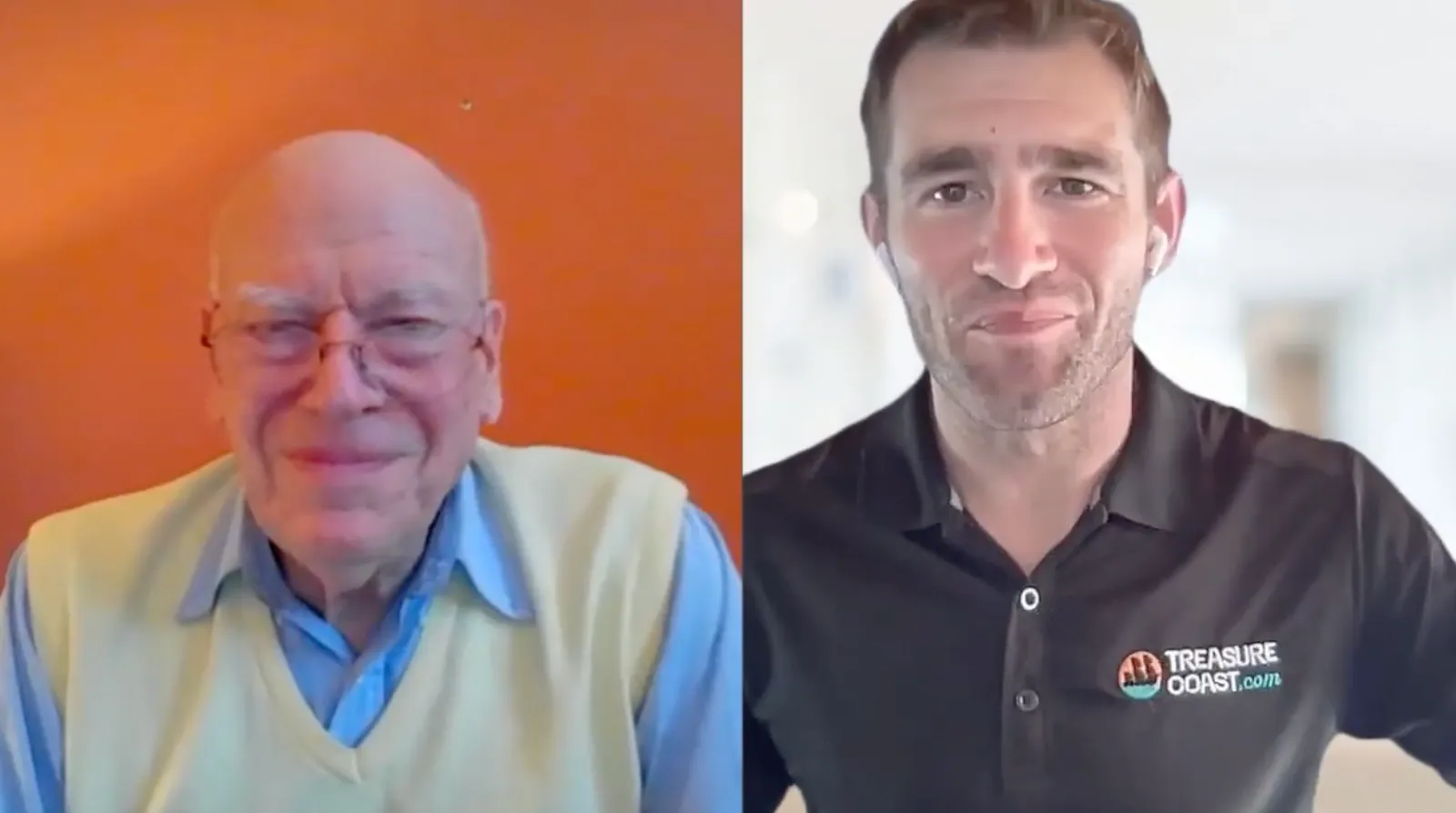
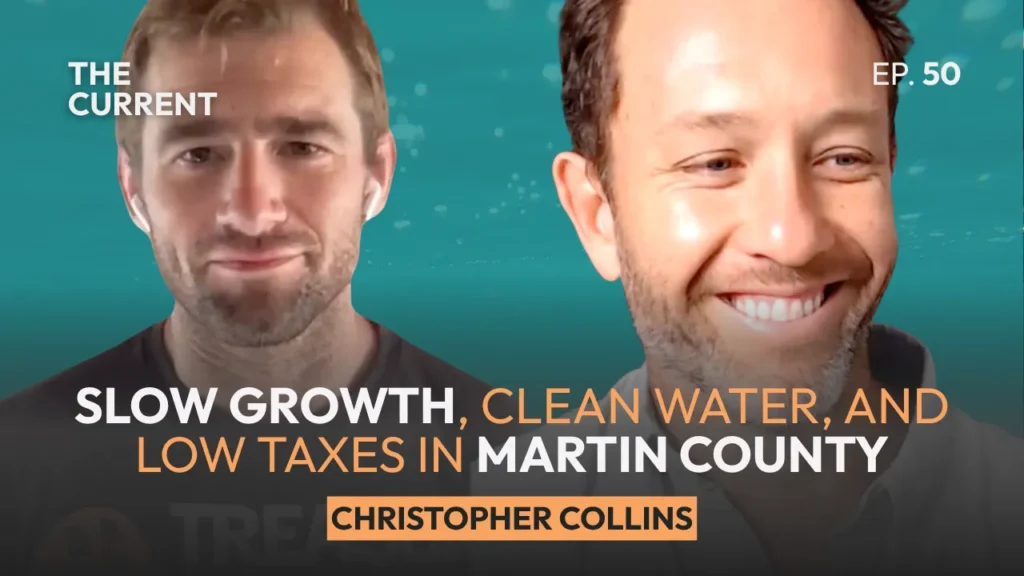
Christopher “Doc” Collins is running for Martin County Commission after spending the last four years as a Stuart city commissioner and mayor. A chiropractor who has run a Downtown Stuart practice for 15 years, Collins is married with four young children. His platform centers on what he describes as slow growth, water quality, and lower taxes.
From Stuart Mayor to a County Race
Collins said he felt he accomplished much of what he set out to do in Stuart, pointing to updated land use codes and what he described as more sensible density limits that curbed large apartment developments in the city. He said he now sees the county level as where the more significant growth battles will play out over the next four years, citing large planned developments in the Palm City area, including Newfield and Storie, and continued buildout of agricultural land in south and west Martin County.



How Large Land Use Decisions Get Made
Collins said major development decisions typically involve a combination of state legislation, developer proposals, and local land use regulations. He pointed to Martin County’s Comprehensive Growth Management Plan as the primary framework limiting density, intensity, and building height across the county, arguing that most conflict arises when developers request exceptions to that plan rather than building within its existing limits.
As an example, he pointed to the Newfield development in Palm City, agricultural land originally approved for development roughly a decade ago that is now being built out at a far higher density than its original zoning allowed, a shift he said will bring several thousand new residents into an area that was previously rural.
What Slow Growth Means at the County Level
Collins said his definition of slow growth includes maintaining building heights at four stories or under and holding development to the density and intensity limits already written into the comprehensive plan, both outside the urban services boundary on agricultural land and within it in already developed areas. He said this approach guided his work in Stuart and would carry over into how he approaches county-level land-use decisions.
Property Tax Reform and Government Spending
Collins said he supports an upcoming statewide property tax reform measure, framing his position around prioritizing essential services such as police, fire, and infrastructure, while reducing what he considers nonessential government spending and staffing. He said he opposes cuts to public safety or capital improvement projects like roads and sidewalks, arguing that cost savings should instead come from reducing the size of government staffing and administrative costs.
AI Data Centers and the Martin County Difference
Collins said he opposes the construction of AI data centers anywhere in Martin County, arguing that their long-term environmental effects, including impacts on local water supply, are not yet well understood. He said he does not believe any location in the county would be appropriate for this kind of development, given the county’s reliance on agricultural land use protections in its comprehensive plan.
On a proposed data center in Indiantown, which falls outside Martin County’s jurisdiction, Collins said he had heard, but could not confirm, that the project may be connected to the utility infrastructure involved in the town’s original incorporation. He said Martin County can collaborate with Indiantown as a separate municipality but does not have direct authority over its land use decisions.
TreasureCoast.com covered Collins’s earlier work as Stuart’s mayor in a previous episode, Chris Collins on becoming Stuart’s mayor.
Water Quality, Discharges, and LOSOM
Collins explained that water quality and water volume in the St. Lucie Estuary fall under two different agencies. The South Florida Water Management District regulates water quality through basin management plans, while the U.S. Army Corps of Engineers controls the volume and timing of discharges from Lake Okeechobee. He said the Corps’ current Lake Okeechobee System Operating Manual, known as LOSOM, includes a multi-year period without scheduled discharges to the St. Lucie following an initial release at the start of the new operating schedule.
Collins said the city of Stuart hired an environmental attorney during his time in office to pursue grant funding focused on removing legacy muck from the St. Lucie River, describing sediment layers in some areas that are several feet deep. He pointed to an emerging technology using fine nanobubbles, which settle into the sediment layer and help introduce oxygen that supports bacteria capable of breaking the material down over time, as one option the city has explored. He also pointed to seagrass restoration and oyster bed installation as longer-term investments meant to help demonstrate the estuary’s ecological value as storage capacity, including the EAA reservoir, comes online and reduces the need for future lake discharges.
TreasureCoast.com has covered related water quality topics in previous episodes, including conversations with the Florida Oceanographic Society and on water issues ahead of local elections.