Key Discussion Points
- City of Stuart approved 3,000 apartment units in four years before Collins took office, increasing density by 18% in a municipality of 16,000 to 17,000 residents
- Collins advocates following existing comprehensive growth management plans rather than rezoning parcels for higher-density development
- Brightline withdrew from the agreement to pay half the cost of a proposed $60 million Stuart station, creating financing disputes with Martin County
- State legislation threatens municipal zoning authority, potentially forcing slow-growth advocates to run for state legislative seats
Mayor Collins’s Path to Public Service
Christopher Collins began serving on the Stuart City Commission over three years ago after becoming frustrated with apartment development he viewed as inconsistent with the city’s character. He ran for office believing Stuart needed stronger leadership willing to prioritize residents’ quality of life over developer interests.
Collins was appointed mayor in December under Stuart’s rotating mayoral system, where commissioners serve one-year terms. Before entering public service, Collins worked as a chiropractor in the private sector.
He identifies three core issues driving voter concerns in Stuart: development and slow growth, taxation, and water quality. Collins frames these priorities as interconnected challenges requiring constant attention rather than one-time solutions.




The Affordable Housing Paradox
The Stuart City Commission approved approximately 3,000 apartment units in the four years preceding Collins’s election. In a municipality with a historical population of 16,000 to 17,000 residents, this represented an 18% increase in potential population density.
Collins explains that the previous commission justified these approvals as addressing affordable housing needs through supply and demand economics. The theory held that saturating the market with rental units would drive prices down through increased competition.
The opposite outcome occurred according to Collins. As thousands of new units came online at market rates of $2,000 to $3,000 per month, existing rental properties increased their prices to match the new market ceiling. Residents from New York, New Jersey, Connecticut, Fort Lauderdale, and other higher-cost markets filled the new apartments, demonstrating that creating units in Stuart does not restrict occupancy to existing residents.
Several approved developments have not yet been constructed, including apartments planned near the Costco location. Collins states that as these remaining units come online, they will continue to put upward pressure on rental prices while increasing traffic congestion.
Collins argues the apartment construction strategy primarily benefits private equity firms and hedge funds by creating tradable real estate assets. Rental-focused development prevents middle-class families from building home equity as a hedge against inflation and rising costs.

Rendering of Baron Landings in Stuart.
Code Changes and State Intervention
In 2020, the Stuart City Commission amended the comprehensive plan and municipal code to facilitate apartment development. Changes included relaxed parking requirements and a redefinition of dwelling units that Collins describes as creating “half units.”
The code modifications doubled the maximum allowable density from 30 units per acre to 60 units per acre with conditional use approval. Collins characterizes these changes as enabling dramatic density increases without corresponding infrastructure improvements.
After taking office, Collins and his commission colleagues implemented a zoning-in-progress moratorium to halt new multifamily applications while reviewing how code changes had occurred. The commission cleaned up what Collins calls “lax” provisions and resumed accepting applications under tightened standards.
Senate Bill 180 (SB 180) responded to similar municipal actions statewide by restricting local governments from implementing code changes that could be perceived as “more burdensome” to developers. Collins describes the language as intentionally vague, creating license for lawsuits against municipalities.
The legislation applies retroactively to when Stuart began its zoning-in-progress review, potentially exposing the city to legal challenges over code corrections Collins believes serve residents’ interests.
Collins predicts slow-growth municipal commissioners will increasingly run for state legislative seats as developers bypass local opposition by securing favorable legislation in Tallahassee. He suggests the Florida Legislature may experience the same political realignment that has elected development-skeptical candidates to city and county commissions statewide since COVID-19.
Comprehensive Growth Management Plan Philosophy
Collins advocates strict adherence to existing comprehensive growth management plans rather than case-by-case rezoning decisions. Every parcel in the City of Stuart and Martin County already has designated zoning and land use established through long-term planning processes.
He uses residential neighborhoods as an analogy: just as single-family zones prohibit construction of drug treatment facilities on individual parcels, larger-scale zoning should prevent conversion of commercial or industrial land to residential use.
Collins identifies industrial and commercial properties as particularly valuable for job creation. He cites Hog Technologies as an example of the high-end marine and aerospace industry that provides employment, allowing families to afford local housing. Converting these parcels to apartments eliminates job-producing square footage while creating bedroom communities for remote workers relocating from other regions.
In Martin County, Collins points to agricultural land rezoning as the equivalent problem. The Newfield area in Palm City changed zoning from one unit per 20 acres to a minimum of 30 units per acre, representing what Collins describes as a dramatic density increase.
He argues that maintaining existing zoning creates a level playing field where all property owners follow the same rules established in long-range plans. Allowing planned unit developments (PUDs) and individual comprehensive plan amendments creates opportunities for corruption when some applicants receive approvals, while others do not.
Collins contends that following existing plans protects Martin County’s unique character and market stability. He states the county’s comprehensive growth management plan has historically insulated the area from the dramatic price swings affecting Tampa, West Palm Beach, and Port St. Lucie. Markets flooded with apartments experience greater volatility, while controlled growth maintains stable property values and tax bases.
His prescription for redevelopment focuses on improving quality rather than increasing density: “Make Martin County nicer, not more dense.”
Brightline Station Financing Dispute
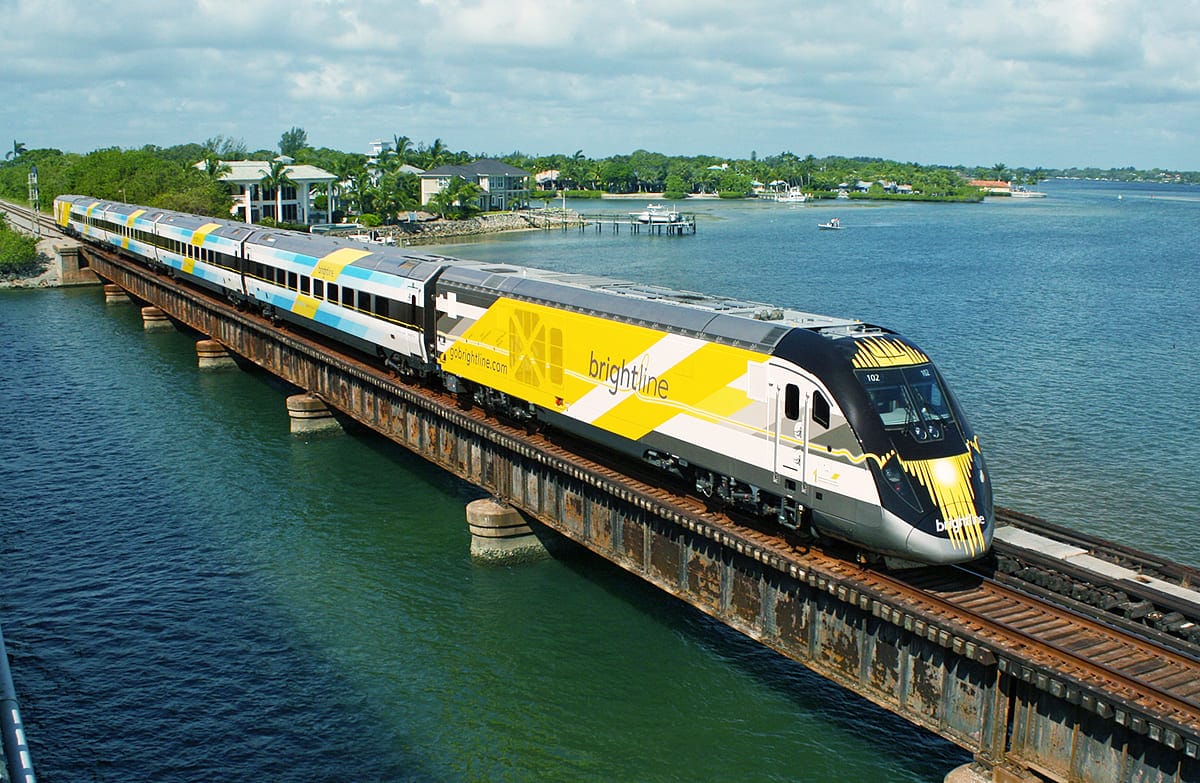
The proposed Brightline station in Stuart became contentious over financing rather than the concept itself. Collins distinguishes between “the fantasy of Brightline” where residents imagine convenient train access to Miami Heat games, and “the reality of Brightline” involving taxpayer costs and logistical challenges.
The original agreement called for Brightline to pay half the cost of a $60 million station. At the final negotiation stage, Brightline withdrew its financial commitment according to Collins.
The revised financing structure would have required City of Stuart taxpayers to fund $30 to $45 million, with Martin County contributing $15 million and Brightline paying nothing. Collins states the city commission refused to sign under these terms, demanding Brightline maintain its original 50% commitment.
Brightline then negotiated directly with Martin County on a deal maintaining the county’s $15 million contribution while seeking $45 million in federal grants to cover the difference previously expected from Brightline and the city.
The proposed station location in the Martin County Courthouse parking lot, behind Erneston Produce and near the lumber yard creates additional complications. Approximately 130 courthouse staff members currently use the lot. If converted to Brightline parking, Collins states these employees would need to park on streets already allocated to previous development projects through planning agreements.
Collins predicts the station location would create traffic and parking nightmares unless developers build a parking garage on site, which current plans do not include.
High-Pressure Development Sites
Collins identifies the Sailfish Ball Fields near the proposed Brightline station as vulnerable to further development pressure. He advocates requiring voter referendum approval for any development of the recreational facilities to protect them from conversion to mixed-use projects.
The Martin County Metropolitan Planning Organization’s long-range transportation plan includes a bus depot adjacent to the Brightline station. Collins opposes this configuration, which would sit next to a middle school in a historically Black single-family neighborhood.
He argues against placing high-density transit-oriented development near parks and schools, regardless of what planning documents propose.
Water Quality Maintenance
Collins describes water quality as requiring “constant vigilance” rather than a solved status. The multi-year Lake Okeechobee discharge problem has been addressed through the completion of reservoir projects, though Collins does not specify which facilities.
The City of Stuart maintains what Collins characterizes as a “decent relationship” with the U.S. Army Corps of Engineers and employs an environmental attorney. Collins attends Rivers Coalition meetings as part of ongoing engagement with water quality advocacy.
He warns that ending involvement in water policy would allow the return of conditions from 2016 and 2018, when algae discharges caused illness in dogs and people. While not facing an immediate crisis, water remains a priority requiring continued participation in regional planning and advocacy.