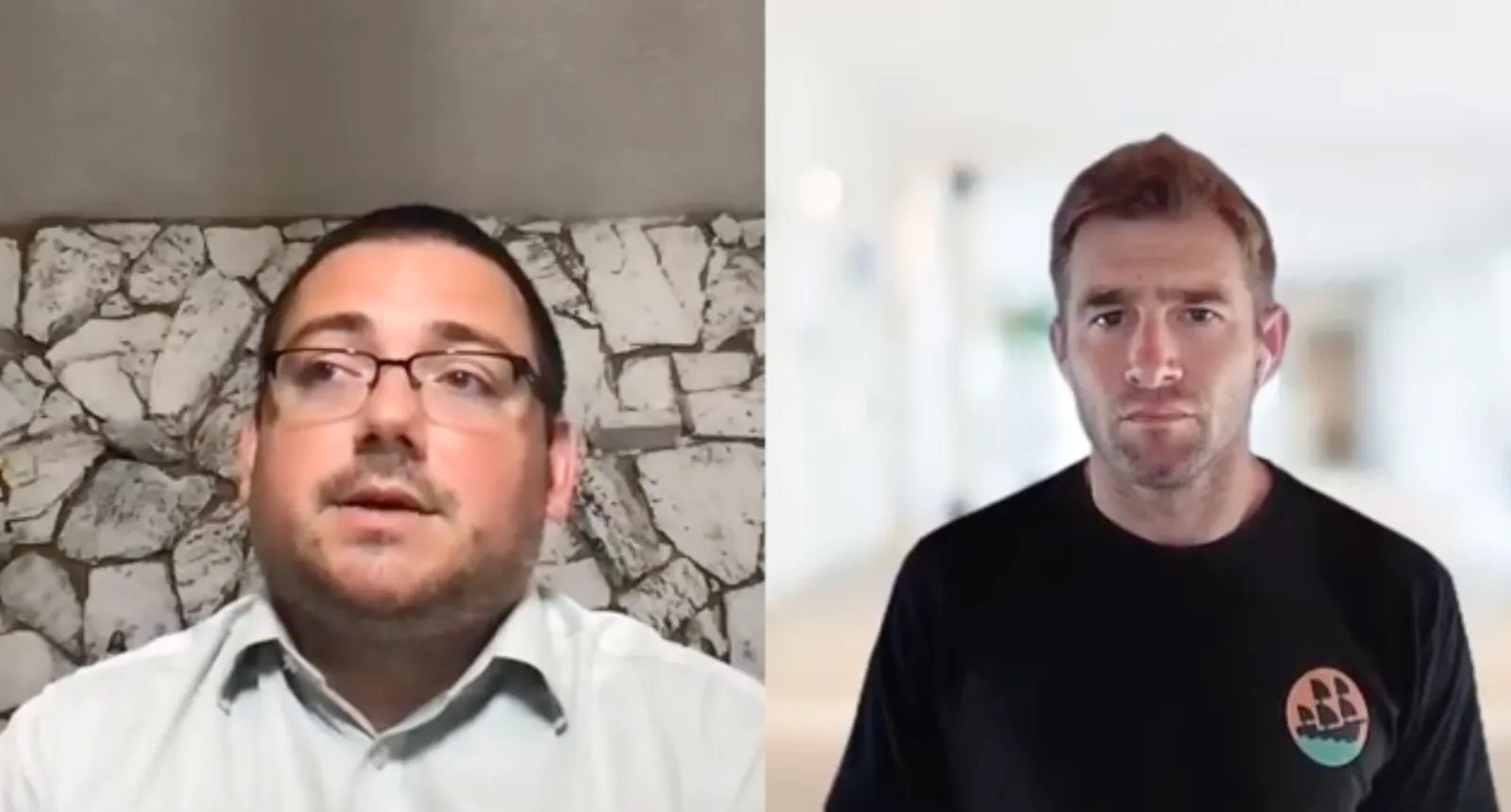
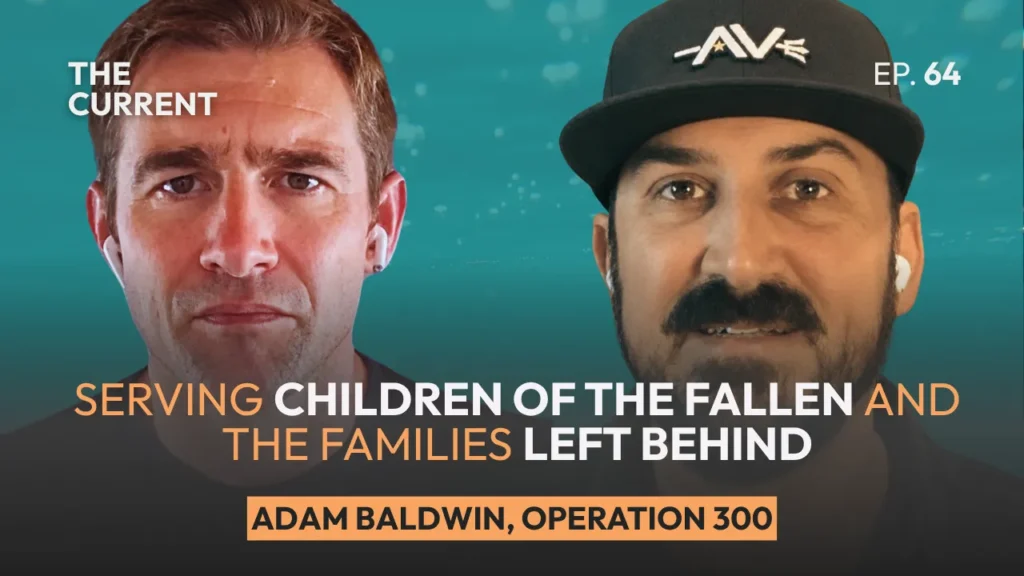
Operation 300 flies children who have lost a parent in military or law enforcement service to Camp Valor in Stuart, pairs them with volunteer mentors, and gives them a weekend of the kind of activities they would have done with their dad. It costs the families nothing. Adam Baldwin, the organization’s chief marketing officer, joined The Current by TreasureCoast.com to explain how it started, how it works, and how Treasure Coast residents can get involved.
Key topics Baldwin discussed in the conversation:
- The loss of Navy SEAL Aaron Vaughn and the founding of Operation 300
- The organization’s programs and how many families they serve
- Why the two-to-one mentor ratio and small camp size matter
- What Gold Star and White Star families are
- How to become a mentor or volunteer
- Upcoming fundraising events and the future of Camp Valor



Where Operation 300 Began
On August 6, 2011, a helicopter carrying 30 Americans was shot down in the Tangi River Valley of Afghanistan while rushing into battle. Known as Extortion 17, it remains the largest single loss of life in Naval Special Warfare history.
Among those killed was Special Operations Chief (SEAL) Aaron Carson Vaughn, who had served on SEAL Team One before finishing his career with SEAL Team Six. He left behind two small children, a son not quite two years old and a daughter who was nine weeks old.
Baldwin’s wife, Tara Vaughn Baldwin, was Aaron’s sister. Thinking about the many children who lost a father in that single shootdown, she asked a question that became the organization’s mission: who was going to do the things her brother would have done with his kids?
Operation 300 launched in September 2012 with a single camp and eight children, all from Naval Special Warfare families. The concept was simple. Pair each child with a father-aged male mentor and spend a weekend doing the things you learn from a dad: shooting, fishing, archery, camping, chopping wood.
One thing became clear immediately. No mother was going to send a child alone, so the moms came too, staying at a hotel in West Palm Beach while the kids camped. That arrangement became a program of its own.
What the Organization Does Today
Operation 300 is a registered 501(c)(3) that has held 66 camps over the past 12 years, with 30 to 50 children at each. Its programs include:
- Gold and White Star Kids Camps, the founding program, held six times a year for children who lost a parent in military service or to the long-term effects of that service
- Fallen L.E.O. Kids Camps, added recently for children who lost a parent in the line of duty as a law enforcement officer
- Gold Star Father Expeditions, held three times a year for fathers who have lost a child in service
- Gold and White Star Spouse Retreats, running simultaneously with the kids camps in downtown West Palm Beach
- Adopt-a-Pet for Families of Fallen Heroes, which connects families with therapy-certified rescue animals
Families are flown in from across the country at no cost, with all expenses raised by the organization. While the children are at Camp Valor, the organization’s 20-acre property in Stuart, spouses have a structured retreat weekend that includes a boat tour, private beach yoga, and group dinners with other surviving spouses.
The organization is also developing Gold Star Family Freedom Tours, which would offer families private access to national memorials and landmarks in Washington, D.C.
Why the Camps Are Structured the Way They Are
Camps take children ages 8 to 18, who can return every year until they graduate high school. Baldwin said they raised the minimum age after early experience showed six-year-olds were often too young to be away from their mothers while also processing a loss.
Some campers have attended twelve years running.
The mentor ratio stays at two to one, sometimes one to one. Mentors are deliberately father-aged men with families of their own, not college-age staff. Baldwin said that choice matters on both sides, describing mentors who tell their own children they’re missing a game because there are kids who don’t have a dad at all.
The organization works to reconnect returning campers with the same mentor each year. Mentors receive rosters in advance and often choose camps based on which kids are coming back.
Some of those relationships extend well past camp. Baldwin described mentors attending an Eagle Scout ceremony and standing in at a father-daughter dance. Two former campers have since married each other.
What the Kids Actually Get Out of It
Asked what children need most, Baldwin pointed to something that happens before any activity starts. When kids step off the bus at Camp Valor, there is an unspoken understanding that everyone there is there for the same reason.
That’s different from school, where a child who lost a parent is usually the only one. Baldwin said that shared context lets kids drop their guard and simply be kids around each other.
He was direct about the limits of what mentors do. They are not licensed psychologists, and the role is not therapy. It’s presence, listening, and doing things together.
One of the biggest lessons over the years, he said, was that elaborate activities matter less than the time between them. Other organizations offer large-scale trips, and those have value, but Operation 300 found that connection happens in the gaps, around a campfire, walking between stations. That’s why camps stay small. Sometimes an obstacle course does more than something far more expensive.
Grief also looks different depending on where a family is. Whether a loss happened two years ago or eight, whether a mother has remarried, all of it shapes what a child needs that weekend.
Gold Star Father Expeditions
The expeditions for fathers who have lost a child run in partnership with Operation Restored Warrior, a Christian organization based in Colorado Springs that brings a structured curriculum focused on trauma.
Groups stay small, usually 10 to 15 men, and spend four or five days at Camp Valor doing activities including deep sea fishing, clay shooting, and gator hunting alongside the program work.
Baldwin, whose own family is a Gold Star family, said this program exists because of a gap. There are programs for spouses and children, but very little for parents who have lost a child. He said dads regularly tell him it’s the first thing they’ve been invited to since their child died.
Gold Star and White Star Families
Baldwin spent time explaining terminology he said most people don’t know.
A Gold Star family has lost a service member killed in action or killed in training while deployed. A White Star family, a newer term, has lost a service member who died by suicide connected to service-related PTSD after returning home.
Operation 300 serves both. Either way, Baldwin said, a child has lost a parent.
He also drew a distinction between two holidays he thinks get blurred together. Veterans Day honors all who served. Memorial Day honors those who died. He wasn’t asking anyone to skip the cookout or the sandbar, just to hold the reason in mind while doing it.
How to Get Involved
Mentoring is a significant commitment, a full weekend away from your own family, and Baldwin acknowledged that isn’t feasible for everyone. The organization’s mentor roster runs over 100 men and women, all background-checked, fingerprinted, and interviewed.
He addressed one common misconception directly: you don’t need a military, law enforcement, or firefighting background. The roster includes mortgage brokers and graphic designers alongside veterans and officers.
Other ways to help include serving food at camps, running rec games for a few hours, and volunteering at events, which need help with setup, teardown, merchandise, and logistics.
Upcoming events he mentioned:
- The Tequesta Chili Cookoff
- The 9/11 Memorial Stair Climb in downtown West Palm Beach
- The Frogman Run and Swim in Jensen Beach, now in its 15th year
- The Red, White and Blue Bash on October 24 in Palm City, which sells out annually
- A first-ever Gold Star Gala at Mar-a-Lago on Veterans Day, November 11
Volunteer applications, mentor applications, event tickets, and program information are all available at op300.org.
The Next Twenty Years
Camp Valor came together through a land gift. When the High Point development was underway, Christ Fellowship Church and Pulte Homes gifted Operation 300 the 20 acres it now occupies at 9405 SW Kansas Ave in Stuart, which Baldwin said accelerated the organization by years.
Building it out fully will take an estimated three to five million dollars. The organization prioritizes running programs over construction, so progress comes incrementally.
Looking ahead, Baldwin described hopes for expanded programming, more work with the special operations community, and a permanent legacy on the Treasure Coast. He credited Martin County residents for sustained support since the organization began.
For more conversations with the people shaping Florida’s Treasure Coast, visit The Current by TreasureCoast.com.
This conversation touches on service-related PTSD and suicide. If you or someone you know is struggling, the 988 Suicide and Crisis Lifeline is available 24/7 by calling or texting 988. Veterans can reach the Veterans Crisis Line by dialing 988 and pressing 1.