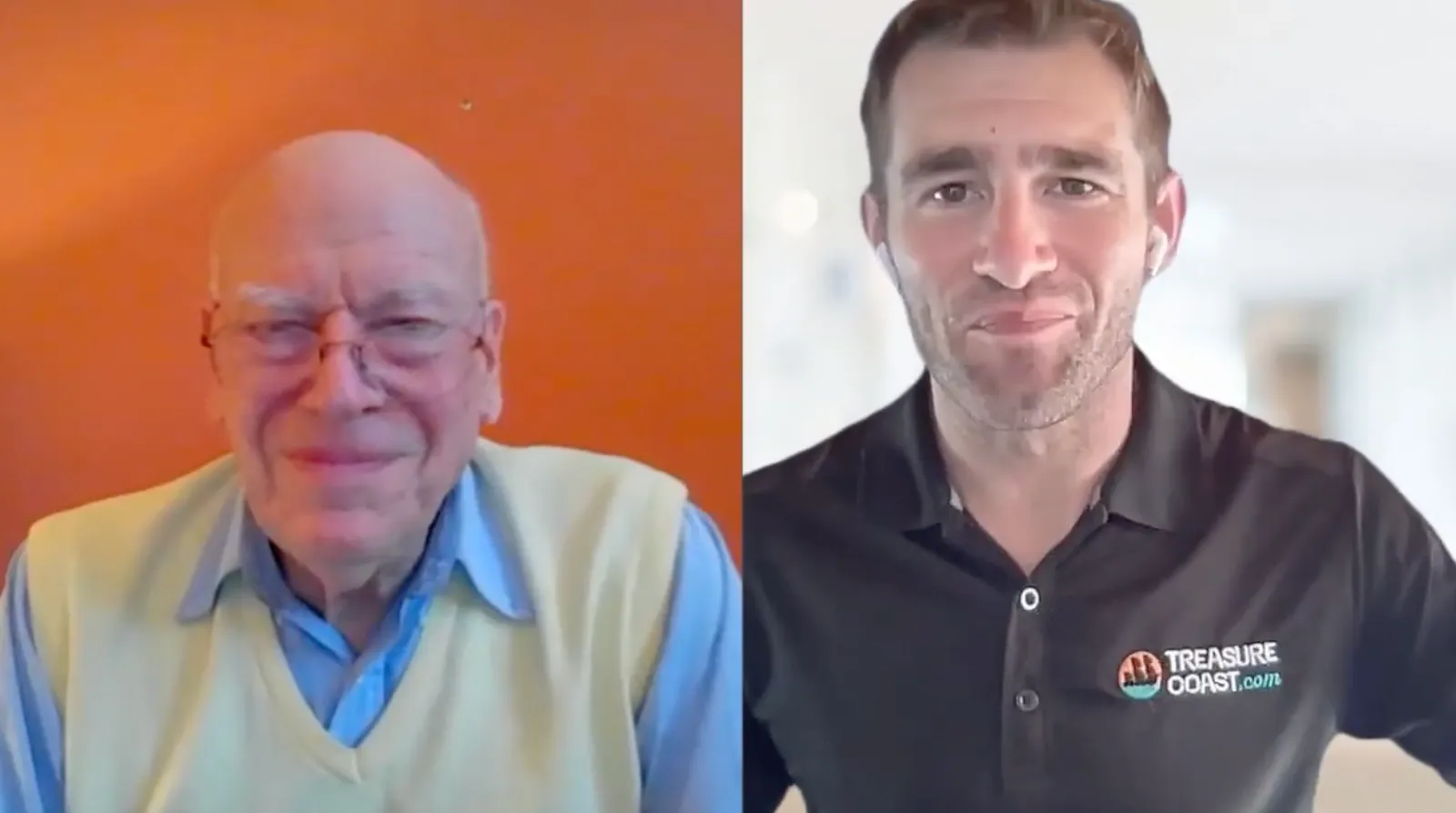
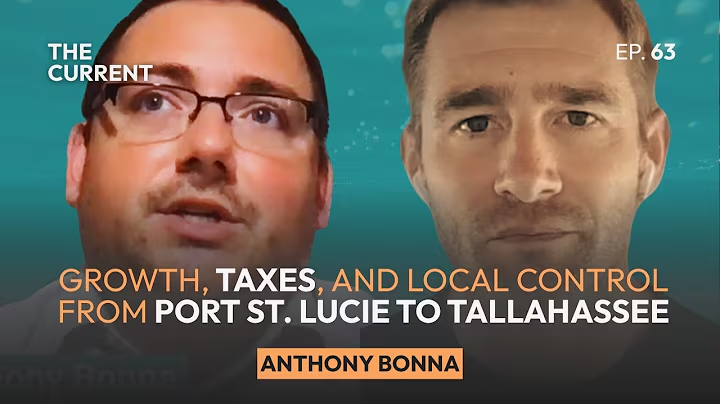
Anthony Bonna, a Port St. Lucie city councilman, is running for the Florida House of Representatives on a platform shaped by his years in local government. He joined The Current by TreasureCoast.com to discuss growth management, property tax reform, infrastructure funding, and why he believes recent state legislation has gone too far in limiting what local communities can decide for themselves.
Key topics Bonna discussed in the conversation:
- Port St. Lucie’s record on millage reductions, debt paydown, and green space acquisition
- Why he cast the only vote against a major residential development over road obligations
- His view that the Live Local Act and SB 180 stripped too much local control
- Property insurance stabilization and home hardening investment
- School choice, teacher pay, and the growing focus on trades
- Amendment 3 and why he thinks a constitutional amendment is necessary for tax relief



From Big Brothers Big Sisters to the Florida House
Bonna grew up in Port St. Lucie raised by a single mother working two jobs. He credited a series of community organizations with shaping his path: Big Brothers Big Sisters, where he was a little brother, Scouting, where he earned Eagle Scout rank, and scholarships from the local Rotary Club and Chamber of Commerce that helped him attend Georgetown University, where he earned a finance degree.
He returned home and has since served many of those same organizations, spending more than a decade as a Rotarian and Big Brother, serving on the Big Brothers Big Sisters board, and completing two terms as chairman of the St. Lucie County Education Foundation.
Governor Rick Scott appointed Bonna to the St. Lucie County Commission in 2018, giving him roughly eight months in county government before an unsuccessful election bid. He was elected to the Port St. Lucie City Council in 2021 and has since chaired the Treasure Coast Regional Planning Council.
Lessons on Property Taxes
Bonna said his time on the county commission taught him something that still shapes his approach. St. Lucie County had the state’s highest tax rate, and he proposed a property tax reduction that did not advance. He was told conditions that year made a reduction impractical, with a commitment to revisit it the following year.
By the next budget cycle, he was no longer on the commission, and he said the reduction did not happen even though several of the stated obstacles had resolved. His takeaway: elected officials have to act on the information in front of them rather than defer decisions to a future board.
He contrasted that with Port St. Lucie’s record, noting the city has reduced its millage rate for eleven consecutive years and now has one of the lowest city millage rates among Florida’s largest cities. He argued incremental annual reductions compound in a way that one-time rollbacks do not.
Growth, Infrastructure, and Developer Accountability
Asked what responsible growth means, Bonna started with honesty. Much of the growth arriving in Port St. Lucie now was approved decades ago and carries property rights the city cannot simply revoke, and he said residents deserve to hear that plainly.
Where the city can act, he pointed to purposeful green space acquisition and to holding developers to their infrastructure commitments. He described casting the lone vote against a parcel in the Riverland development over how traffic obligations were calculated. The project used a trip-generation code for 55-plus communities, which assumes substantially fewer vehicle trips than standard single-family housing, and road obligations are triggered by projected trips. Bonna argued that residents of any age need the same basic road capacity to reach a hospital, grocery store, or church.
He acknowledged the vote was largely symbolic and that the developer likely had the stronger legal position, but said the point needed making. He also noted road construction costs have risen sharply in recent years, making it harder for local governments to stay ahead of infrastructure needs without shifting costs onto residents.
Local Control and State Legislation
Bonna said one of the perspectives he would bring to Tallahassee is direct experience with how communities function day to day, which he believes is underrepresented in the legislature. He said that experience would be most useful during the committee process, where legislation gets shaped.
He was specific about where he believes the state has overreached, naming the Live Local Act and SB 180 as examples that went too far. His position: affordable housing and economic growth are legitimate state priorities, but legislation that removes a community’s ability to shape its own growth and preserve its character is bad legislation.
Listeners interested in other perspectives on this issue may want to hear TreasureCoast.com’s conversation with Port St. Lucie Mayor Shannon Martin.
Insurance, Small Business, and Regulation
On property insurance, Bonna credited recent tort reform with reducing litigation volume and helping stabilize rates, noting new insurers have entered the market. He cautioned against overcorrection, arguing that mandates or caps that drive carriers out of Florida ultimately reduce competition and raise costs. He also praised state investment in home hardening programs and said that approach is worth expanding.
For small businesses, his focus is regulatory. He cited the elimination of the business rent tax as a meaningful step and said limiting assessment growth on non-homesteaded properties could help renters and small operators. His broader position is removing unnecessary regulation rather than adding new incentive programs.
Education, School Choice, and the Trades
A graduate of Port St. Lucie public schools, Bonna said education made his own path possible and that supporting public schools and teacher pay remains a priority. He noted recent investments aimed at recruiting new teachers and said veteran teachers should be next.
He also supports school choice, citing the local superintendent’s view that competition improves outcomes across the board. He pointed to recent A ratings for St. Lucie and Martin County districts as evidence public schools are performing well in that environment, and said he resists framing public, charter, private, and homeschool options as adversaries.
On workforce development, Bonna praised the growing focus on trades and described local work with the Economic Development Council and Indian River State College to align training with available jobs. He said the expectation that everyone attends college is shifting, and predicted micro-credentials will become increasingly important throughout people’s careers.
Public Safety and Amendment 3
Bonna said public safety is a central priority and noted endorsements from the sheriff, the Fraternal Order of Police, and the Police Benevolent Association. He described Florida as a law and order state where residents broadly trust and support law enforcement, and framed the challenge as primarily one of funding.
That connects to his position on Amendment 3. Bonna said he has concerns about the measure and acknowledged it is not perfect, but supports it because he does not believe meaningful property tax relief is achievable without a constitutional amendment. He pointed to his own experience as a Port St. Lucie homeowner, where the city portion of his bill has stayed nearly flat since 2019 while other taxing authorities increased substantially.
If Amendment 3 fails, he noted, a tax reform commission is scheduled to convene under the Florida Constitution, so the issue will remain live either way.
Environment and Accessibility
Bonna closed with two commitments. The first is environmental protection, particularly the Indian River Lagoon, which he called a major issue for the region. TreasureCoast.com has covered related water quality efforts in conversations on statewide water policy and with the Florida Oceanographic Society.
The second is accessibility. Bonna said one of the most important parts of serving in any elected role is being reachable, and that residents should be able to have a direct conversation with the people representing them.
More information about his campaign is available at anthonybonna.com. For more conversations with candidates in Florida’s 2026 races, visit The Current by TreasureCoast.com.