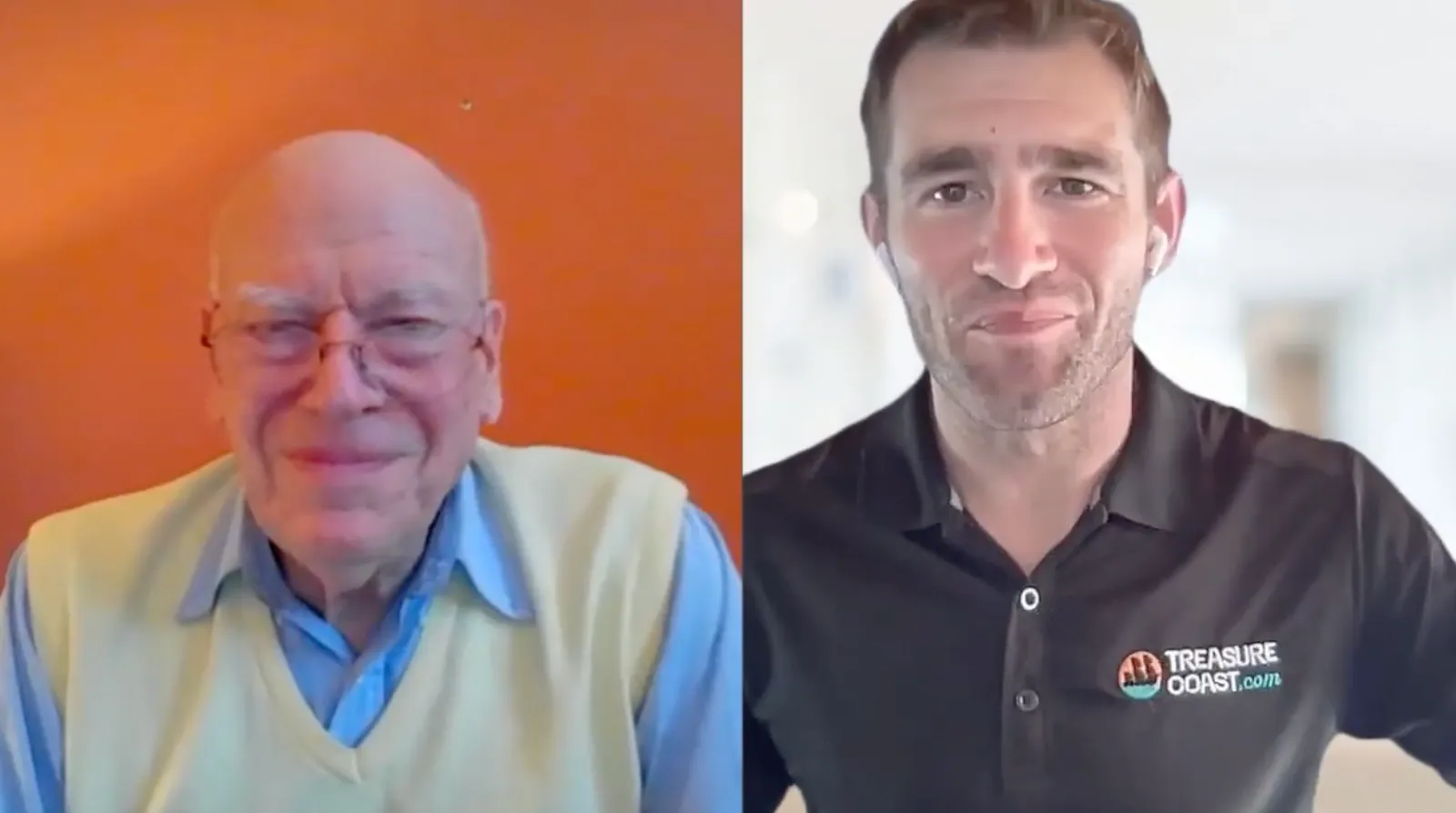
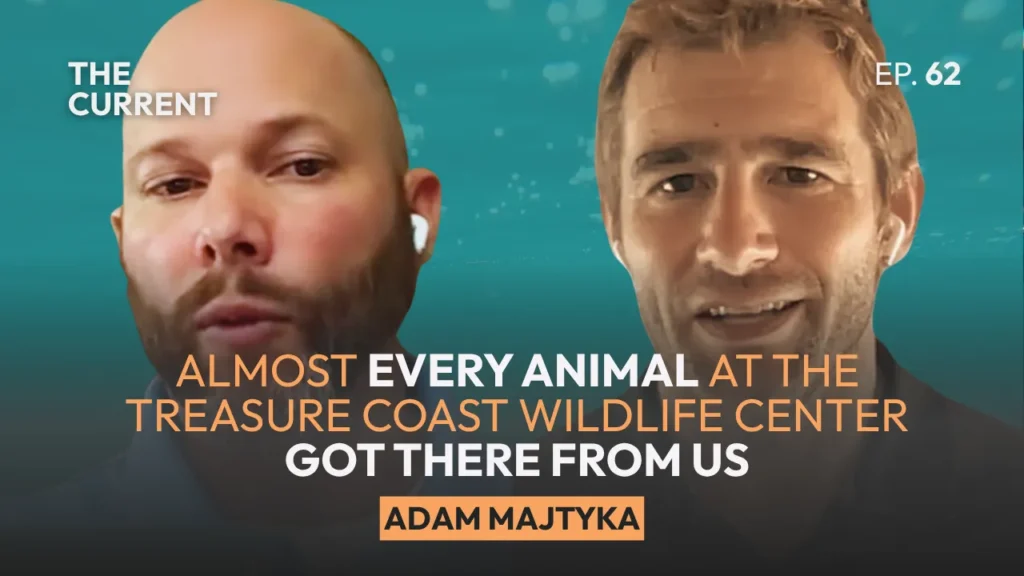
The Treasure Coast Wildlife Center takes in roughly 3,200 animals each year, a number that has been climbing by about 9 percent annually. Founded in 1974 and based in Palm City, the nonprofit serves Martin, St. Lucie, Indian River, Okeechobee, and Palm Beach counties. Adam Majtyka, who marked his first year as executive director this month, joined The Current by TreasureCoast.com to explain what happens to those animals, why most of them end up there because of something a person did, and what residents can do differently.
Key topics Majtyka discussed in the conversation:
- The animals the center treats most often and why they arrive
- What to do, and what not to do, when you find a baby animal
- How the rehabilitation process works from intake through release
- Practical steps homeowners can take to make their yards safer for wildlife
- The dangers of rodent poison for hawks, owls, and other birds of prey
- Which local species are most misunderstood



What the Center Does and What It Sees
The Treasure Coast Wildlife Center is a rehabilitation and release program, taking in sick, injured, and orphaned wildlife brought in by the public, animal control, or anyone who finds an animal in trouble. Education is the center’s second mission, reflected in its tagline, Wildlife Recovery and Human Discovery. Majtyka said the organization is working to be a more visible resource across the region.
Most of what arrives falls into two categories: small mammals and birds. Eastern cottontail rabbits are the single largest group, making up somewhere between 20 and 25 percent of intakes alongside squirrels. The center also sees a significant number of birds of prey, though fewer seabirds than facilities positioned closer to the coast.
The recurring causes are consistent, and Majtyka was direct that nearly all of them trace back to people:
- Interactions with domestic and feral cats and dogs, one of the largest categories
- Vehicle collisions, including gopher tortoises struck by cars
- Baby season injuries, animals that fell from nests or were hurt while fledging
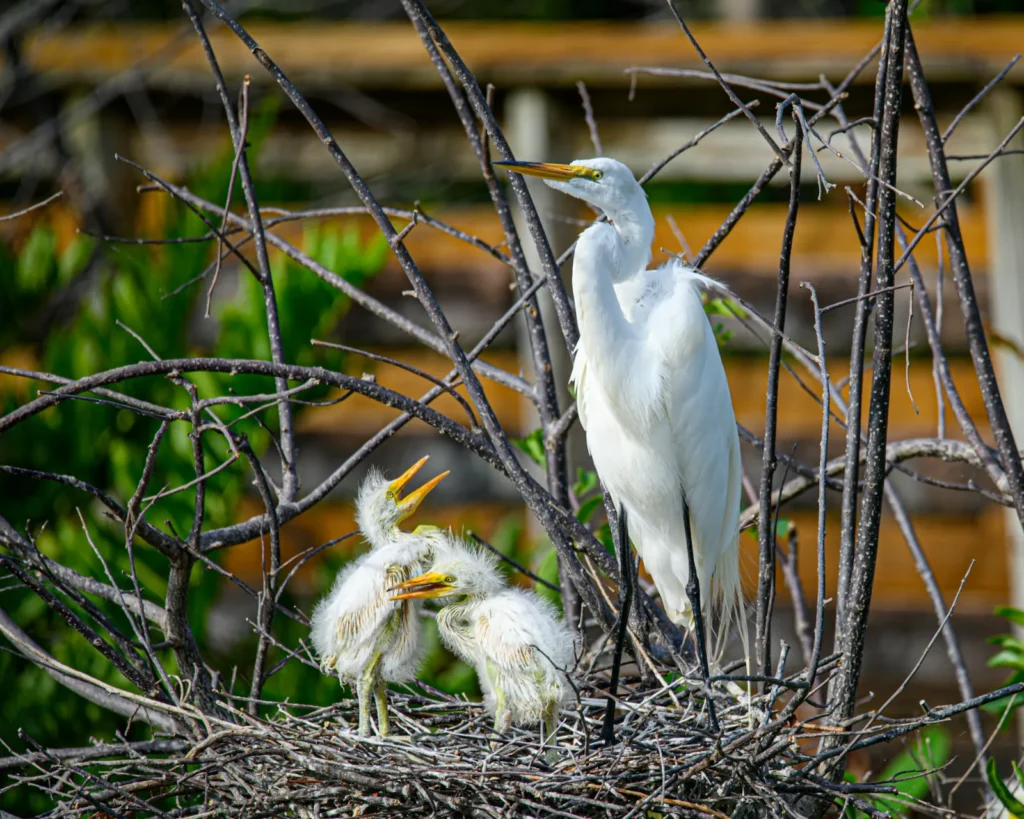
- Fishing-related injuries, particularly discarded line and hooks. Every pelican living permanently at the center arrived with a fishing injury that left it non-releasable
When to Help and When to Step Back
One category Majtyka described is what the center calls kidnapping, when a well-meaning person brings in an animal that did not need rescuing. Once an animal enters the system, the center has to see it through rehabilitation regardless.
His guidance breaks into two situations. If an animal is obviously and urgently injured, a tortoise hit by a car with a cracked shell, for example, get it to a facility or call animal control. Majtyka praised Martin County’s animal control as responsive, though he noted service varies by county.
If the situation is less clear, call first. The center’s wildlife hospital takes calls seven days a week, and several websites offer decision-tree graphics that walk through whether an animal needs help.
The most common example is a baby bird on the ground. Staff will ask whether the parents are nearby and whether the nest is accessible. If the nest can be reached, put the bird back. If not, build one. Majtyka described a caller who used an Easter basket, positioned out of direct sun, and the parents continued raising the chick. Keeping animals with their parents is always the better outcome.
Inside the Rehabilitation Process
The center operates under FWC permits requiring both a veterinarian of record and a licensed rehabilitator, who work alongside animal specialists.
Intake usually happens without the person leaving their vehicle. A staff member meets arrivals at a stop sign, takes the animal, and collects information. From there, each animal is assessed based on species, age, and condition, then given an individualized plan.
Majtyka compared it to a hospital visit. Some animals need only fluids and quiet time before going home. Others require imaging, a reset bone, and weeks of recovery. Animals are evaluated multiple times daily unless the vet or rehabilitator specifies otherwise.
Housing changes as recovery progresses. Animals start in smaller enclosures where they can be kept calm and closely monitored, then move to progressively larger spaces to rebuild strength, particularly birds that need to redevelop flight muscles. Release decisions consider eating, movement, and flight, and are made collectively by the team, including the veterinarian and licensed rehabilitator.
The center is open to the public Thursday through Sunday from 11 a.m. to 3 p.m. for self-guided visits, with staff available for questions. Paid guided tours can be arranged in advance and tailored to the group, and the center offers outreach programs for schools and homeowner associations across the region.
The Biggest Threats to Local Wildlife
Asked what most endangers wildlife in the region, Majtyka named invasive species, feral cats and dogs, and human encroachment, noting all three ultimately trace back to people.
On invasive species, he pointed to research showing devastating declines in small mammal and bird populations in the Everglades. He resisted ranking species by importance, arguing that a common rabbit matters to the ecosystem as much as a listed endangered species like the roseate spoonbill, since everything functions as an interconnected system.
Feral cats and dogs drew particular concern. Majtyka, who has worked in the zoo and aquarium field for about 15 years and describes himself as a lifelong animal lover, said free-roaming cats and dogs are killing an enormous number of native birds and small mammals across Florida.
On development, he cited estimates that Florida loses roughly 100,000 acres a year, which would mean a million acres over a decade. Rather than framing this as a fight to stop growth, Majtyka suggested a middle path: encouraging developers to set aside meaningful green space within projects. He noted that residents genuinely value parks and natural areas inside their communities, which makes preservation a selling point rather than a sacrifice.
Listeners interested in more Treasure Coast conservation conversations may want to hear TreasureCoast.com’s episodes on shorebird and sea turtle conservation and the Florida Oceanographic Society’s ecosystem work.
What Homeowners Can Do
Majtyka offered several practical suggestions for making residential property more wildlife-friendly:
- Plant native species. He noted growing interest in native landscaping and its value to local ecosystems.
- Rethink palm trimming. The standard hurricane cut removes all dead fronds, but leaving some provides nesting material, shelter, and insect habitat.
- Clean bird feeders regularly. Current guidance suggests monthly cleaning to limit disease spread among birds congregating in one spot.
- Check trees before trimming. During baby season, ask tree services to check palms for nests first.
- Watch the yard before letting dogs out during baby season.
He spent the most time on rodent control. Poison used for rats accumulates in birds of prey that eat multiple poisoned rodents, building to toxic levels over time. The center treats hawks and owls for this secondary poisoning and has a program for it, though outcomes are not guaranteed. He recommended talking with pest control providers about alternatives, mentioning that the center itself uses a rodent birth control product, and noting that snap traps, while unpopular with some, avoid the secondary poisoning problem entirely. He also said newer rodenticides designed to reduce secondary poisoning are entering the market.
The Most Misunderstood Species
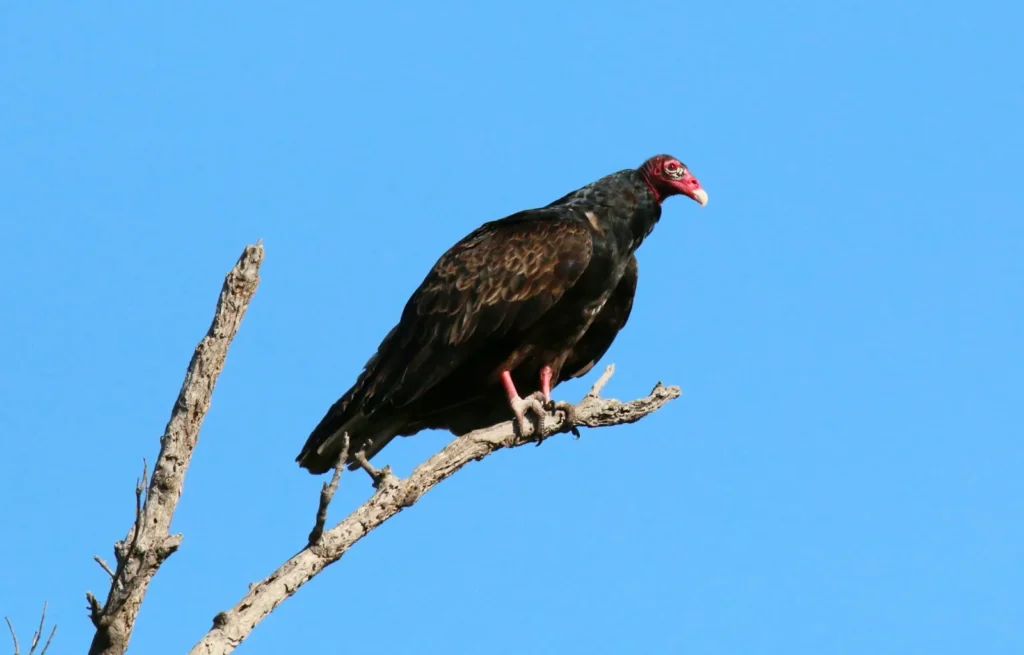
Majtyka’s favorite example is the vulture. Their bald heads prevent blood and tissue from accumulating on feathers, their digestive systems neutralize dangerous bacteria, and they have adaptations that further limit disease transmission. By consuming carcasses, vultures stop pathogens from spreading, and research has documented increased disease spread in areas where vulture populations declined.
Snakes were his second example, valuable for controlling insects and rodents around homes even though many people would rather not encounter them.
He also discussed how adaptable urban wildlife has become, noting that coyotes now live in essentially every American city, including recent sightings on Hutchinson Island, and describing a breeding pair of peregrine falcons living in downtown Detroit.
Seasonal Awareness
Baby season on the Treasure Coast runs from roughly February through August, making it the highest-alert period for anyone doing yard work. Migration season follows, beginning around September, with Florida positioned along major routes for birds and insects. Majtyka mentioned an Arctic tern that came through the center last November.
Sea turtle nesting season overlaps as well, which is why residents on Hutchinson Island hear frequent reminders about downward-facing lighting.
How to Get Involved
The center is a 501(c)(3) nonprofit that receives no government funding, relying on grants and community donations. It is actively recruiting volunteers and expanding its volunteer program with additional education and animal care roles. Interested residents can find applications, donation options, membership information, and event details at tcwild.org, or reach the center at 772-286-6200. The organization is also active on Facebook and Instagram as Treasure Coast Wildlife Center.
For more conversations with the people working to protect Florida’s Treasure Coast, visit The Current by TreasureCoast.com.