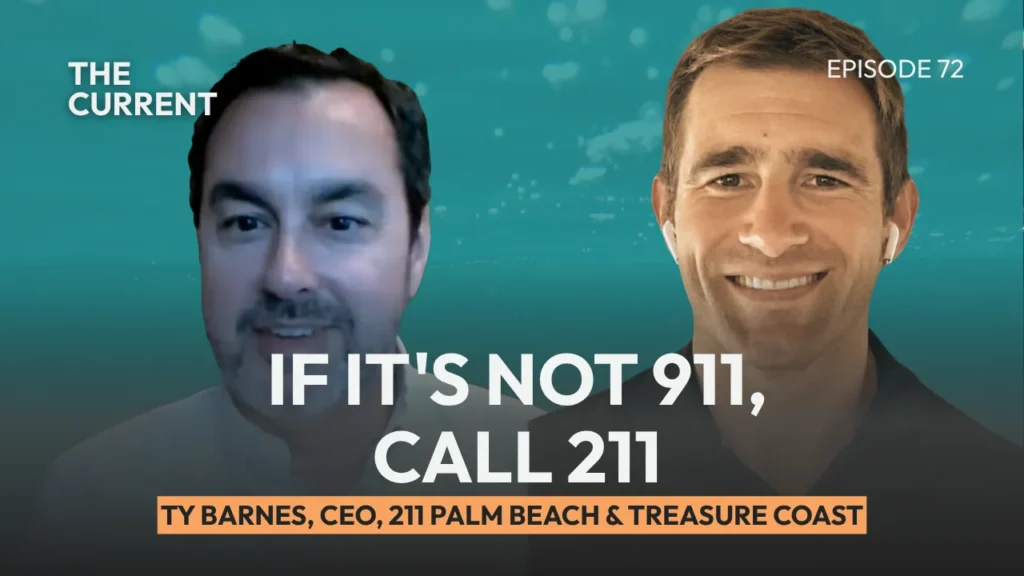
Many people think of 211 as just a hotline. Ty Barnes, president and CEO of 211 Palm Beach and Treasure Coast, says there is much more behind that number. He joined The Current by TreasureCoast.com to talk about the free, confidential helpline serving Palm Beach, Martin, St. Lucie, Indian River, and Okeechobee counties, including 988 crisis support, housing and basic needs, the Sunshine Reassurance Program, and a new storm-rated facility now underway.
Key topics covered in the conversation:
- What 211 is, who can use it, and the five-county service area
- How 211 answers 988 and handles crisis support
- Housing, basic needs, and mental health as the top requests
- What to expect when you call, text, or chat
- The Sunshine Reassurance Program and wellness checks
- Help Me Grow, Elder Crisis Outreach, and other life-enriching programs
- Holiday, hurricane, and disaster resources
- A new 12,000-square-foot building, how 211 is funded, and how to help



More Than a Hotline
Barnes was born and raised in Vero Beach, a second-generation graduate of the local high school, and still has family there. He has lived in Palm Beach County since 1999. He first learned about 211 more than 15 years ago, when he heard about the Sunshine Reassurance Program, which places daily check-in calls to more than 500 older adults, many of whom do not leave home each day. At the time, he had a mother with Parkinson’s and had had a grandmother with Alzheimer’s, and the service struck a chord. He began volunteering and fundraising, then joined the board of directors and remained there for more than a decade.
That long view is part of why he thinks the public still underestimates the agency. 211 is a 24/7, free, and confidential helpline, answered by local representatives. Residents can call, text, or chat online. The organization never takes a day off.
The service area covers Palm Beach County and the Treasure Coast, including Martin, St. Lucie, Indian River, and Okeechobee counties. Barnes said that footprint includes more than 2.1 million residents, around 10 percent of Florida’s population. Behind the number is a maintained database of more than 1,600 agencies and more than 5,000 resources, organized around children and families, veterans, seniors and caregivers, mental health, and basic needs. People can search that database themselves on the website. Many callers, he said, do not know exactly what they need, and trained specialists help them figure that out, de-escalate a crisis when necessary, and connect them to help that is actually available.
211 has been doing this work since 1971. This is its 55th year. Barnes noted that the agency has been a crisis hotline, suicide hotline, and community helpline for longer than he has been alive, and that it has served the Treasure Coast for more than 25 years. A phrase he hears often, and uses himself, is a simple one: if it’s not 911, it’s 211.
When to Call 211, and When to Call 911
The distinction, as Barnes described it, is straightforward. A life-threatening emergency is a reason to call 911. For other needs, including crisis intervention, suicide prevention, de-escalation, and help finding community services, 211 is the number to use.
211 is also the local first responder for 988. If someone in the region calls 988, Barnes said, 211 answers. The agency received more than 6,000 suicide-related calls last year.
He came back more than once to a point he wanted residents to hear: reaching out for help is a sign of strength. That includes people calling not only for themselves, but for a friend, neighbor, or loved one. 211 takes those third-party calls as well.
The top two needs at the regional level, he said, continue to be housing and basic needs, and mental health and substance use disorders. Demand in both areas is at an all-time high. People are struggling financially, and the calls reflect it.
What Happens on the Call
Barnes said a caller should expect to hear a caring voice that wants to understand the situation and see how to help. Specialists may ask questions to identify where someone is and then search for options. He described 211 as the connective tissue of the health and human services and basic needs community, with a staff member who maintains the resource database full time and stays in touch with partner agencies so the information is current.
The call is anonymous. 211 keeps the information a person chooses to share. Specialists may ask for a zip code, county, town, or other details tied to eligibility, which can narrow the search more quickly than the self-service options on the website. That same conversation can include the crisis intervention and de-escalation work the agency is known for.
The important part, Barnes said, is that the person on the line is a local one.
The Sunshine Reassurance Program
The Sunshine Reassurance Program is the service that first drew Barnes to 211, and it remains one of the most concrete examples of the agency’s daily work. Staff place check-in calls to more than 500 older adults each day. An outreach worker spreads the word across the Treasure Coast and in communities with large senior populations. People can call 211 to enroll, sign themselves up, or refer an elderly loved one or neighbor.
Participants choose a regular time window when they know they will be home. The program is more than a friendly call. If 211 cannot reach someone, there is a follow-up protocol, then a backup contact. If that person cannot reach the enrollee either, 211 can send a wellness check.
Barnes shared one example that has stayed with him. A woman on the program told him she had fallen late at night and could not get up. She said she knew she was all right, and she knew Sunshine would send someone in the morning, so she waited calmly. Family members were grateful too. The people who make the calls, Barnes said, often come back with stories about the residents they speak with each day, and those conversations brighten both sides of the line.
Children, Seniors, and Life-Enriching Work
Beyond crisis response, Barnes pointed to what he called the life-enriching work.
Help Me Grow, part of the statewide Florida program, has specialists who evaluate children to see whether they are meeting developmental milestones. Some children stay in the program for years and work with the same specialist the entire time, which Barnes said those staff members value.
In Palm Beach County, 211 has long run Elder Crisis Outreach, which helps seniors who find themselves in crisis and, as Barnes put it, “pseudo case manager” them toward the resources they need. That program has recently expanded into Martin County. He also mentioned help for parents of children with special needs in St. Lucie County, and support for veterans and first responders.
Those services, he said, enrich people’s lives, brighten their days, and make the path a little easier.
Holiday Help and Disaster Resources
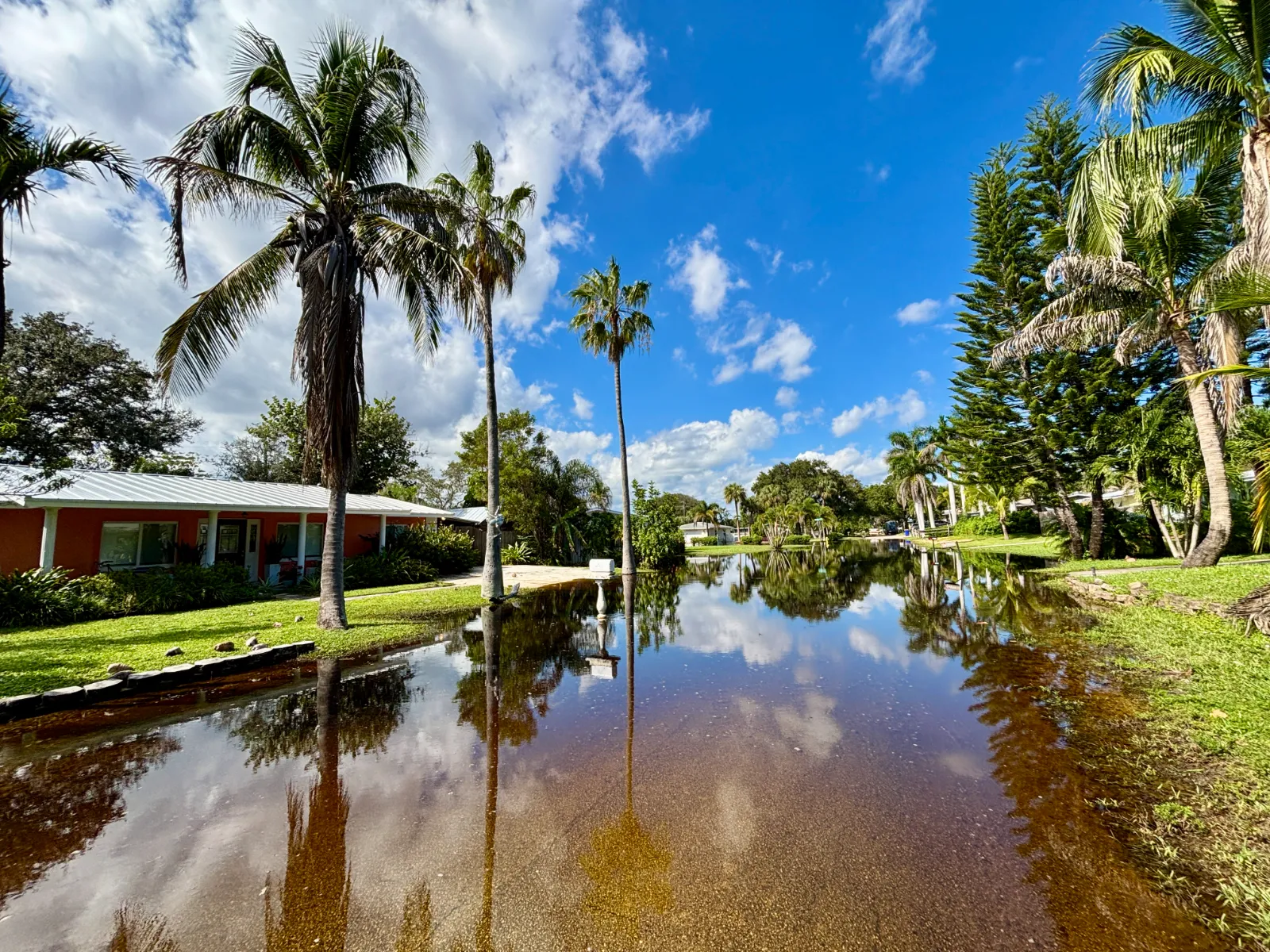
211 also keeps a current list of seasonal and emergency resources on its website. After a hurricane or other natural disaster, that includes where to find water and food, information the team works around the clock to keep updated. The agency plays a part in disaster response and recovery, and the site is also used around back-to-school backpack drives, holiday food drives, and toy programs.
Barnes said the holidays can be stressful even for people who appear to have it all together, because life is rarely as perfect as it looks. For residents in need, 211 can help find meals, gifts, and other seasonal resources. His larger point was that people should not assume everything is okay for everyone around the holidays.
The same website, 211pbtc.org, is the address he asked to be used when pointing the public to 211. Residents can call, text, chat, or search the resource database there.
A New Building and How 211 Is Funded
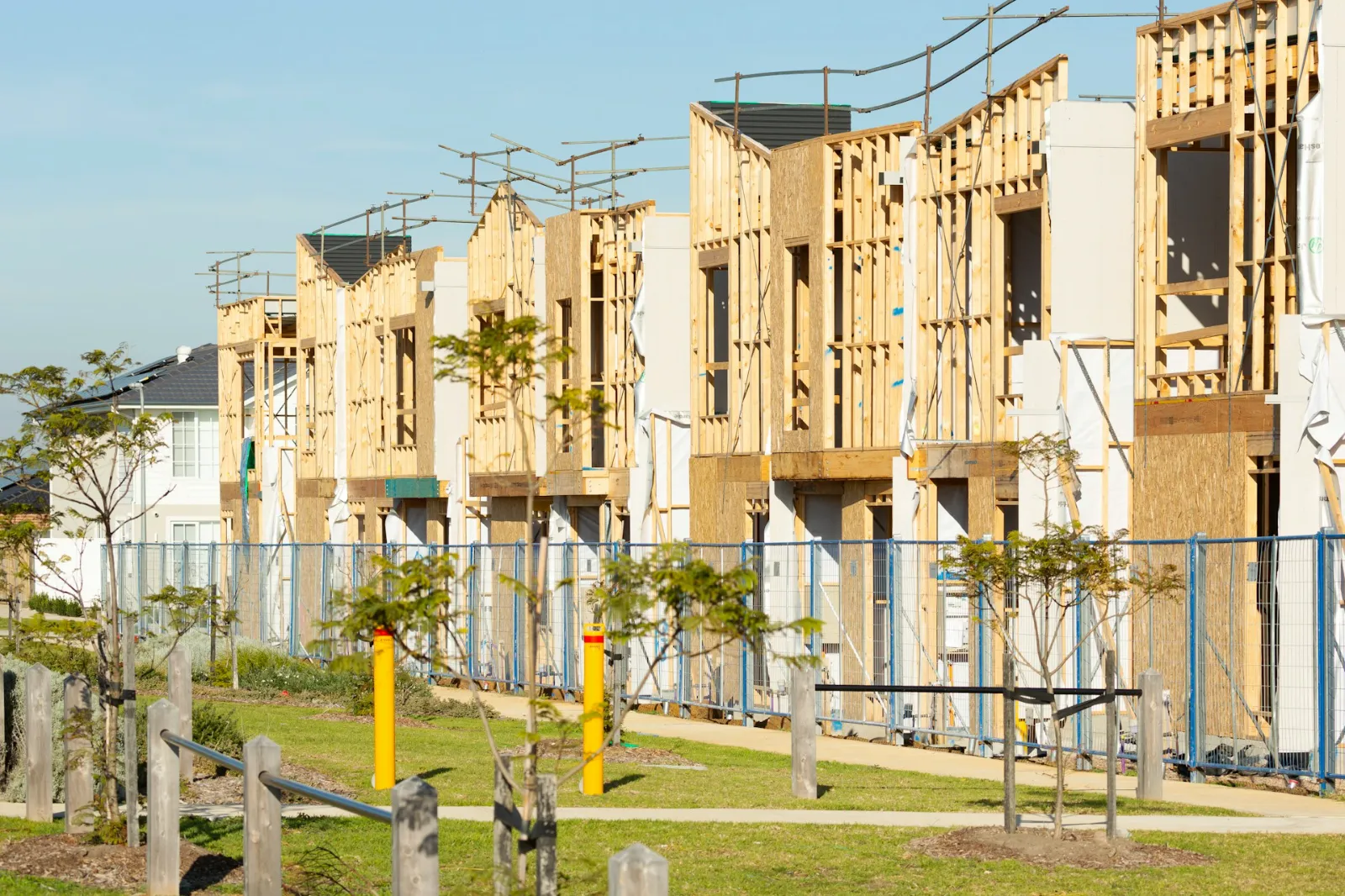
One of the bigger changes now underway is physical. About four years ago, 211 set out to raise $6 million for a new building. The agency had been operating in an old warehouse that Barnes said was well beyond its useful life and quite dilapidated. That building has been demolished, and construction is well underway on a 12,000-square-foot, two-story, storm-rated facility. The goal is a stronger role in disaster recovery and response, and a better environment for the people doing the work.
Asked how 211 is funded, and how residents can help, Barnes said the support comes from a mix of government organizations, local governments, United Way, private foundations, and individuals. The agency has more than 60 funders. Donations can be made through the website. Anything given to the organization, he said, goes to its mission of helping children and families, seniors, veterans, mental health and substance use support, crisis intervention, and suicide prevention.
The Communities 211 Serves
Barnes still gets to Vero Beach often to see his father, his brother, and his nieces, and he still thinks of it as home. He called the Treasure Coast remarkable and charming, and said each community within it is unique and tight-knit. He also noted that questions about growth, and about what to resist and what to welcome, are not unique to the Treasure Coast. The same pressures exist in Palm Beach County, sometimes at a larger scale, and those stresses can lead people into crisis as well.
That is part of why he sees value in younger residents getting involved in local organizations and finding ways to be of service. For Barnes, leading an organization that supports the whole geography is a point of pride, and a reminder that the same number, 211, is meant to work for every community in the five-county region.
More information, including the resource database and donation options, is available at 211pbtc.org. For more conversations with the people shaping Florida’s Treasure Coast, visit The Current by TreasureCoast.com.
This conversation includes discussion of suicide and crisis support. If you or someone you know is struggling, the 988 Suicide and Crisis Lifeline is available 24/7 by calling or texting 988. Veterans can reach the Veterans Crisis Line by dialing 988 and pressing 1.